Current State of Research on the IL-2 [2025]  Part 3:  Fuselage


Without any doubt, it is the most asked question both on this site, and in my personal e-mail: "Where-- and when-- are the Il-2 In Profile & Scale volumes? Surely they must be done soon, yes?" Alas, no. I am sad to clarify that there will never be a P&S title on the beloved Il-2. Advancing years and poor health have made that task impossible for me to fulfil. The great understanding of this programme to the level required will have to fall to someone else. In fact, the story is so complicated, and the scale of knowledge so immense, I rather suspect that this will have to be the single magnum opus of some dedicated research talent, as yet unknown. It will always be a personal regret of mine that over these long years I just could not find the required time nor opportunity to master this topic; there was inevitably some other mystery that needed solving.

In Part 3 of this review of current research, we will take a technical look at the fuselage of the IL-2.What new things are known, and how does the author interpret these matters in light of the current work on this wonderful topic?...

=============================================

Il-2 Fuselages

The discussion surrounding Il-2 wings is arguably the more common area of investigation on this topic, but perhaps it should not be. In terms of sheer complexity, the matter of Il-2 fuselages is even more complicated than that of wings, and worse still it is by far less understood and documented. It is true to say that our 'general understanding' of the construction method and type of the development of fuselages holds up better to modern analysis than with wings-- e.g. early units were all-metal, then wooden (some early examples with reinforcement), then two-seat wooden units, lastly all-metal again-- but, in detail, no more than that.

For example, no fewer than four different factories built Il-2 single-seat models with metal fuselages. Four. And we know all-to-well from subsequent work that these factories did not build Il-2s identically, sometimes dramatically so. Therefore, how many such fuselages were there? One might speculate that there at least four such, but then what about development at any individual factory; did they make any changes or improvements?

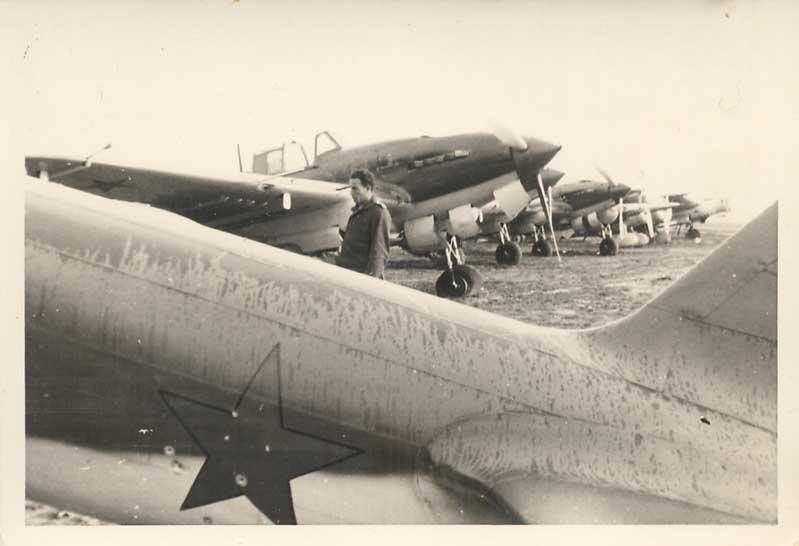
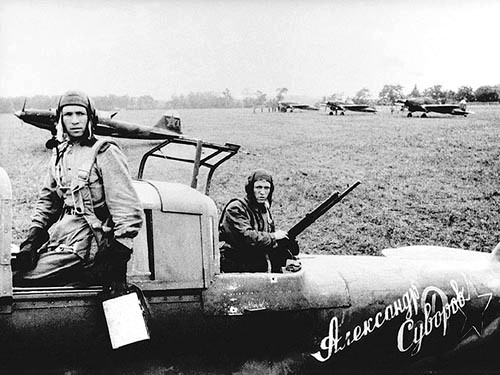
 Here we have a famous photo of an early example with an all-metal fuselage as it is classically depicted.
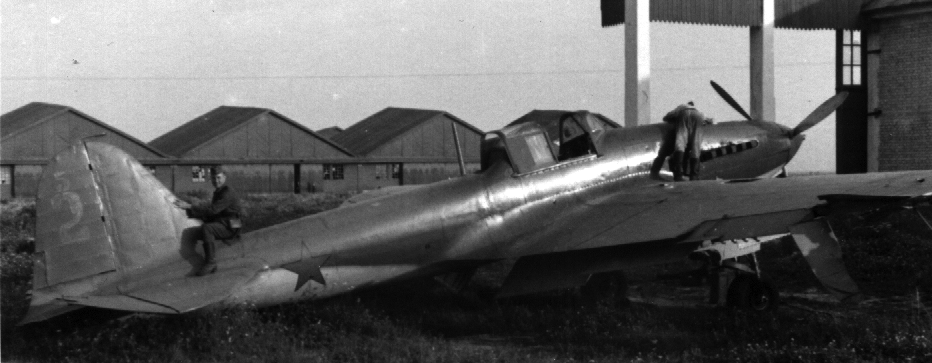
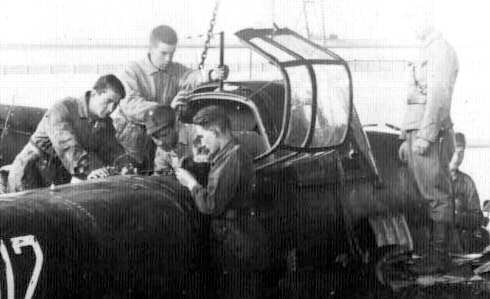
 Here is an even earlier model with a completely different all-metal fuselage. One presumes the work of a different factory, but which?
 And, lastly, a Factory No 30 all-metal fuselage from 1945. None of these units are remotely close to being identical.
A very great deal of work still needs to be done on the matter of the early Il-2 all-metal versions, and no reliable scale line drawings should be expected of any of these versions without considerable additional research.

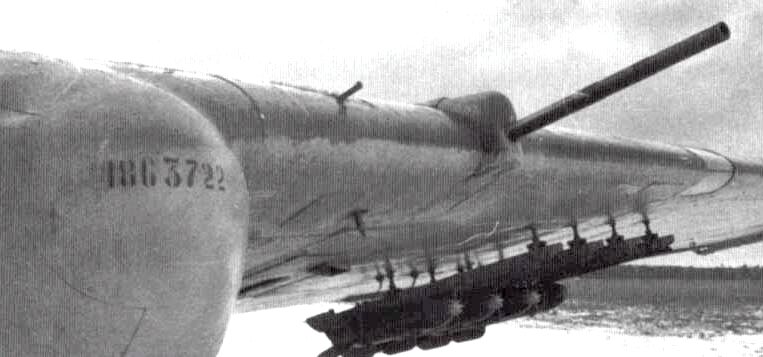
As an aside, speaking of fuselages, the author thinks that perhaps he understands this mystery cipher in use at Factory No 18. The Factory Number (Production Number) of Il-2s from this enterprise have a unique formula: Factory -- unknown -- Example -- Series. The unknown number is always single digit, and always a 6, 7 or 8.

For example, here we have P/N 1863722. The author thinks that the mystery cypher indicates the fuselage type: 6 = original all-metal (single-seat); 7 = wooden (both single and two-seat); 8 = all-metal two-seat. Ergo, Factory 18 -- all-metal single-seat -- Ex no. 37 of Series 22. At least, no known Factory Number to date has violated this proposed solution.

Wing Roots

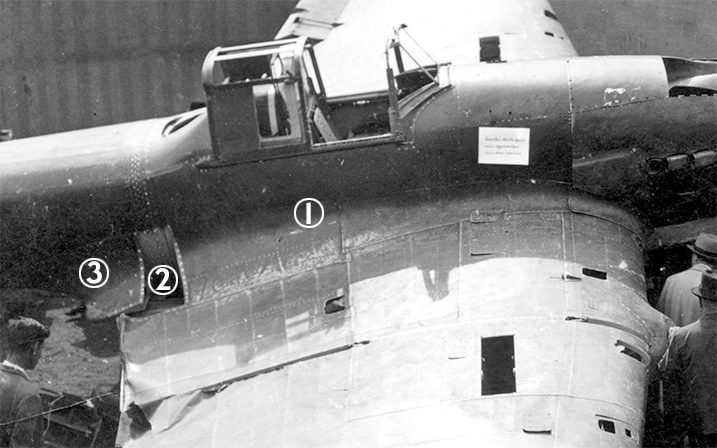
A look at any contemporary set of scale drawings for the Il-2 will reveal a number of problems around the wing root area. That much is often debated. However, one might take note of a certain irony here, in that early wing roots seem to have all featured three aft parts, while two-seaters then had two aft pieces, then the s ulyushennoi aerodinamikoi ('arrow') returned to a three piece format. Indeed, these changes seem to be consistent enough to allow the keen eyed observer to determine wing types of two-seat models with only the aft wing root area in view.

Note the curious 'L' shaped middle piece (here conveniently missing), typical on early models' wing root fillets
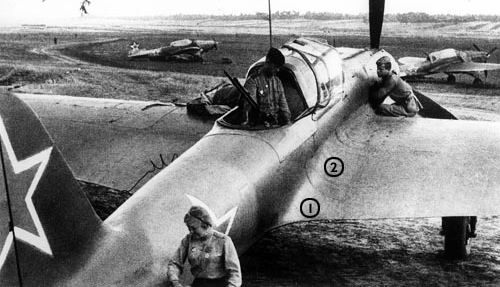
 The usual 2-seat fillet, this on a Factory No 1 built machine
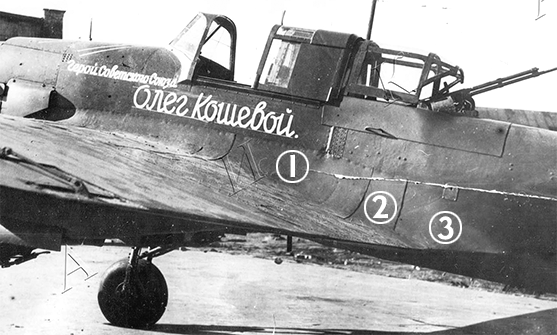
 And on the improved aerodynamics 'arrow', again with three pieces, and slightly larger than the usual 2-seat unit
Aft Cockpit Area

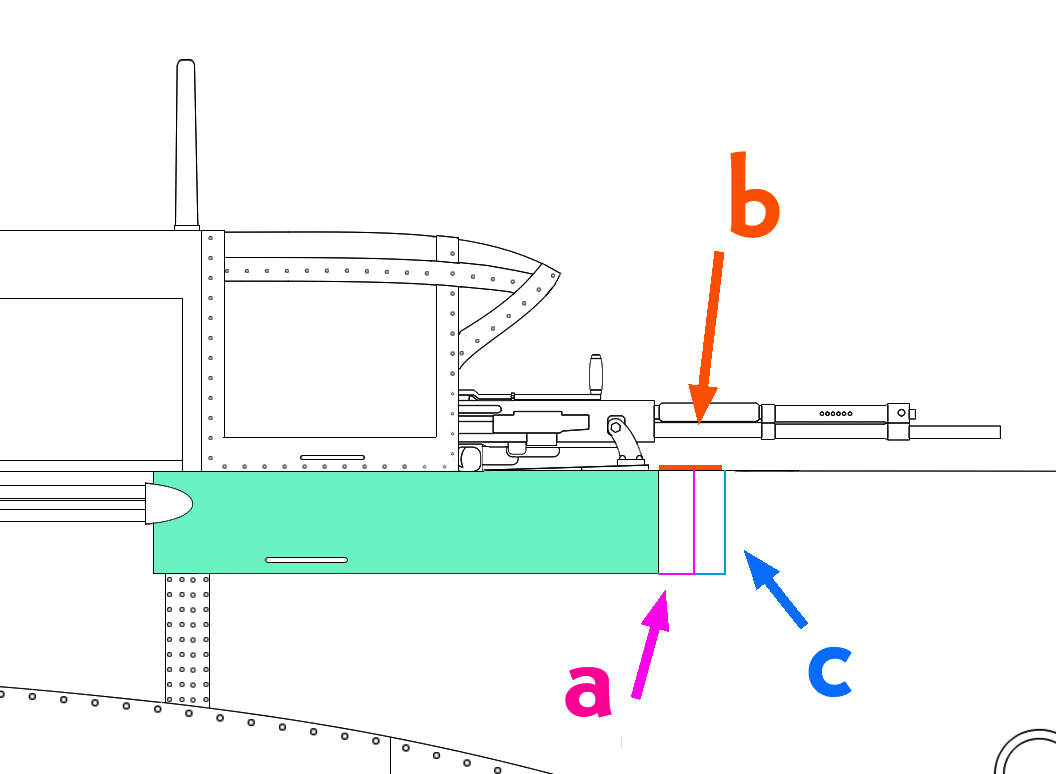
On various 2-seat models, both straight wing and arrow, the area around the rear gunner and the associated reinforment plate varies considerably. These changes are the most notable on Factory No 1 built machines, but can be detected on others as well. At Factory No 1, the size of the reinforcement strip around the gunner varied considerably, from very short to full-sized (vis a vis a Factory No 18 example). To date, the author has not been unable to ascertain any chronological pattern in this behaviour, the mix seemingly to be evident throughout manufacture.
 Factory No 1: The very short reinforcement plate is shown in light green, a) shows the medium length, which sometimes features a raised seam (b) over the central part of the unit and the c) the longest version
 At the factory (No 1), a later model Il-2 with a very short plate and rather thick aft canopy framing
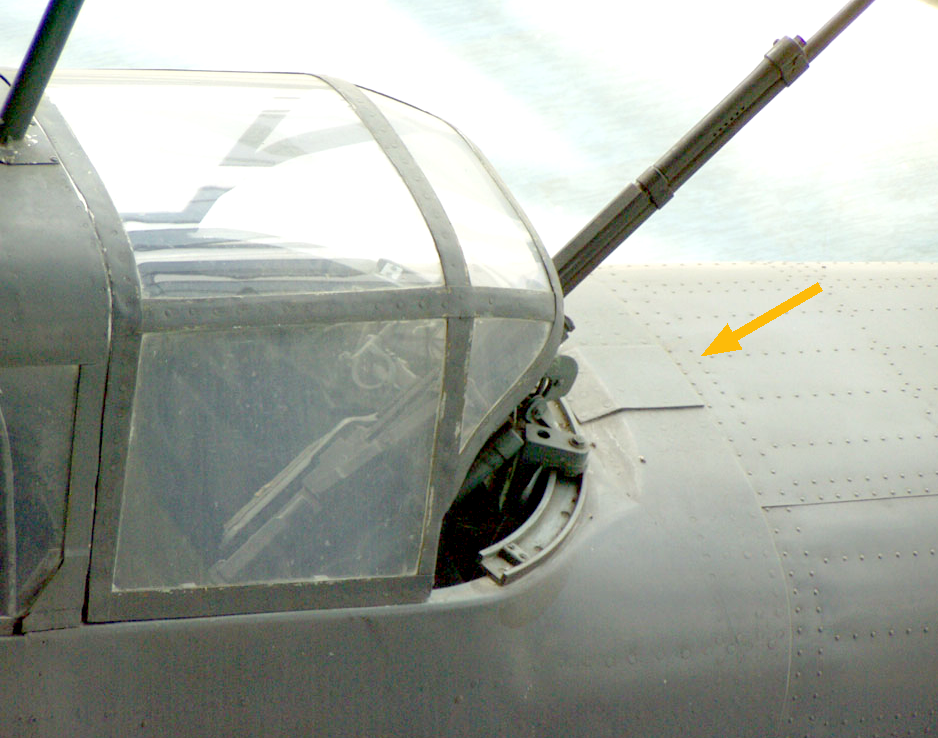
 Factory No 30 machines always featured a seam, and usually were medium length
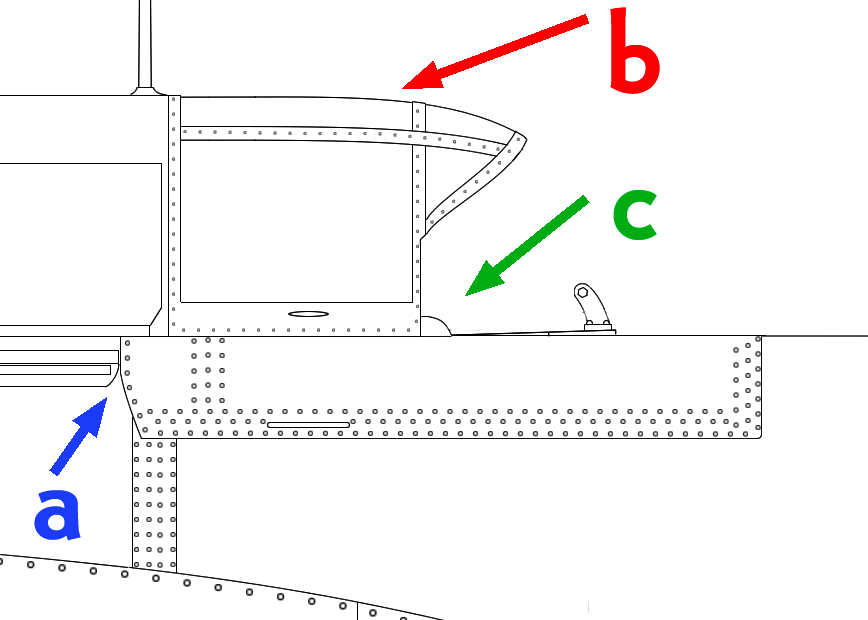
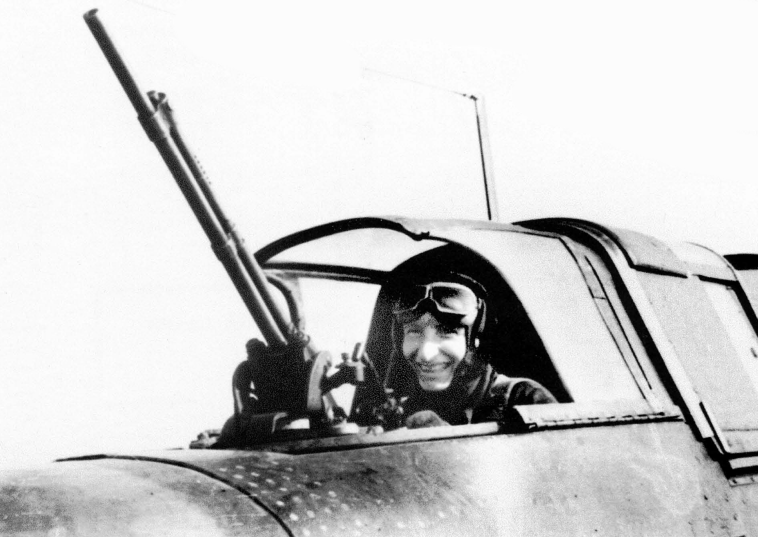
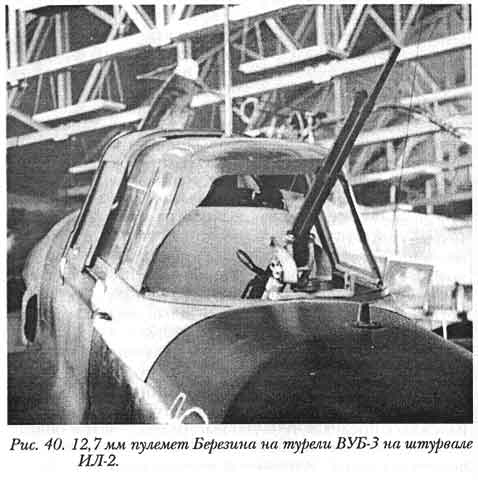
 Factory No 18 units were usually full length with no seam, they featured a different sliding canopy stop area (a), they often (not always) had thinner and more refined rear canopy bracing (b), and featured a small traverse stop (c) for the VUB-3 turret mount
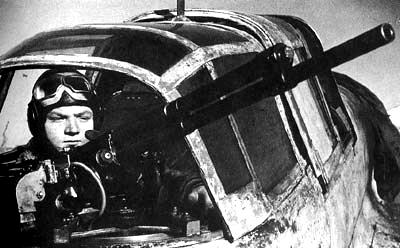
All of these observations, of course, apply to the later pattern two-seat gunner's canopy which appeared around the spring of 1943. As regards the intermediate pattern units seen variously from the autumn of 1942 until spring 1943, the author has yet to strictly identify these permutations. We can see these in images, but perhaps more and better photos are needed. Regardless, one must expect that there will have been factory specific differences with these items as well, and even more confusingly some of these were field modifications and not related to any factoruy work. Good luck sorting this lot out!

A square-ish looking aft canopy where the last panel is somewhat 'closed in' Another square-ish unit where the opening seems to be flush Factory or field made unit?

Tail Landing Gear

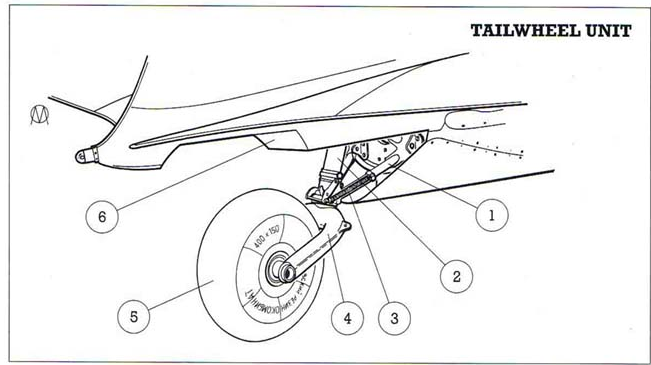
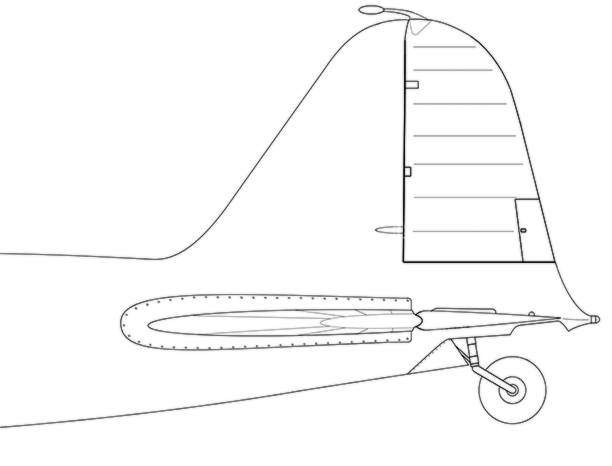
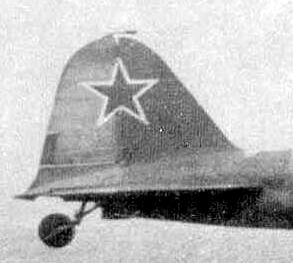
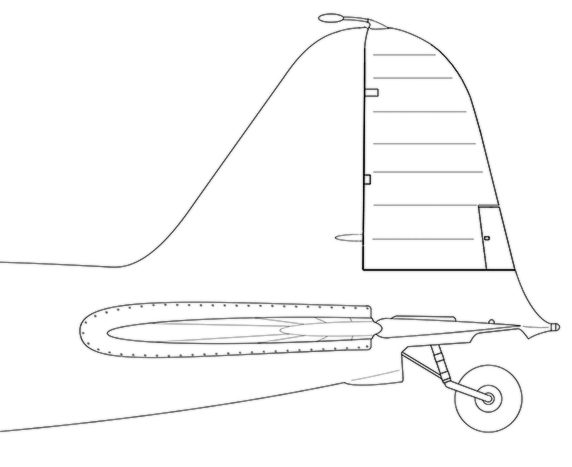
On the two-seat model of the Il-2 (any wing type), the tail wheel area is an excellent means of factory identification. It so happened that each of the three factories built the tail gear area differently, and consistently so. Therefore, when in view, these details afford an outstanding method for isolating the source of manufacture.

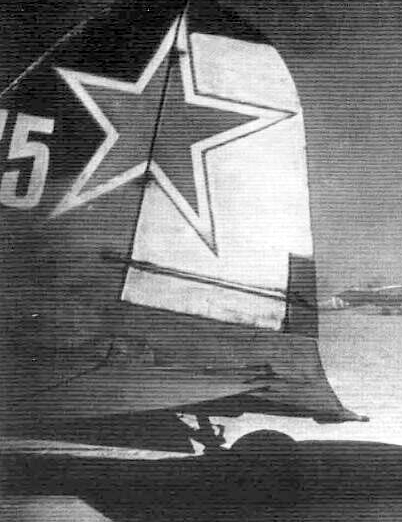
A fine silhouette of the Factory No 1 tail wheel area Drawing of the tail of the Kbely Il-2, P/N 12438 Author's drawing (not to scale)

A nearly perfect silhouette of the Factory No 18 tail showing the shape superbly Author's drawing (not to scale)

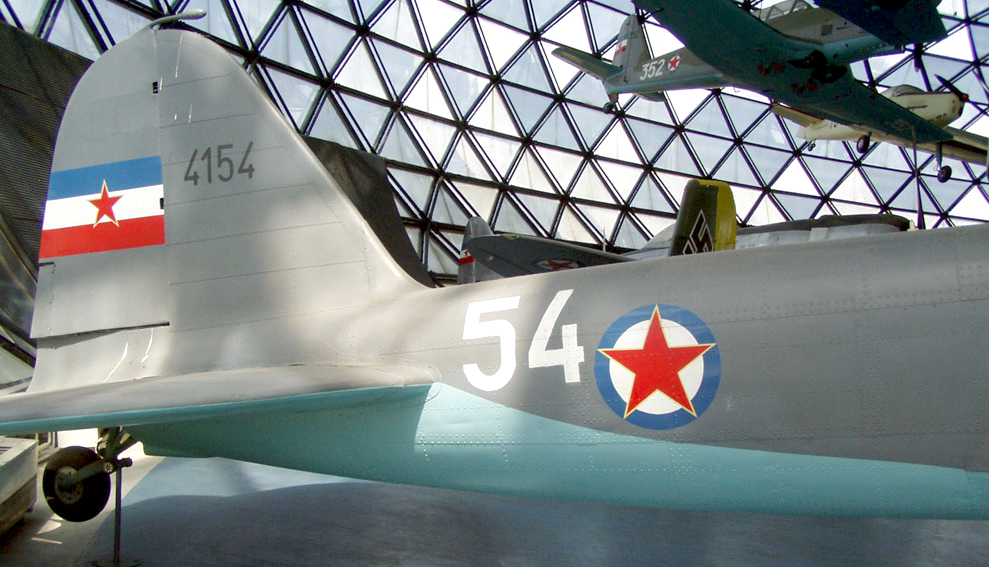
The small bulge on the Factory No 30 tail can be seen Our lovely specimen in Belgrade P/N 308331 Author's drawing (not to scale)

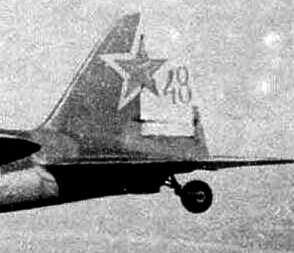
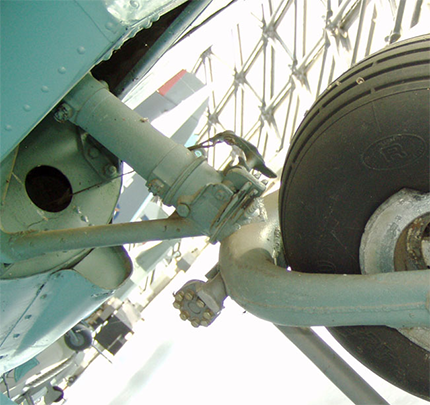
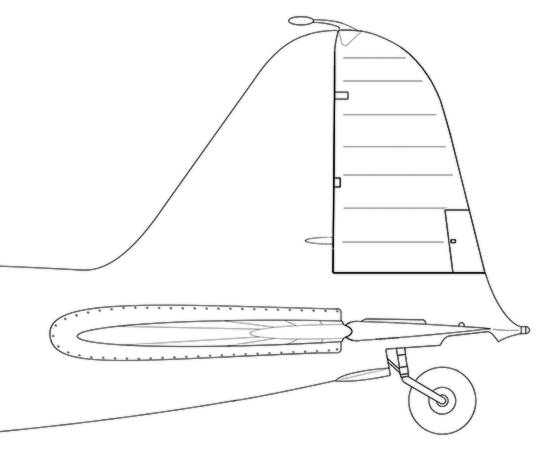
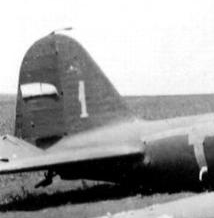
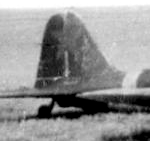
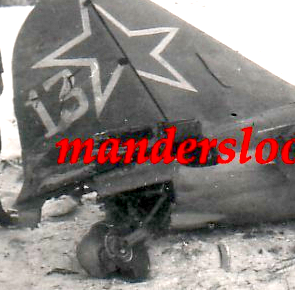
And what of the earlier, single-seat tail wheel area? In all honesty, the author doesn't know. Looking through the photographic record what we see looks to be suspiciously uniform. But, why on earth should that be the case when it is clear simultanously that the fuselage construction is not identical? It's a great mystery. Here are three early examples to contemplate.

The absolute earliest Il-2 of Series 1-4 A wooden single-seater Close-up of an all-metal 1-seat model; all three appear to be very similar

We have only herein scratched the surface of the mysteries surrounding Il-2 fuselages. There is much, much more to ponder. However, perhaps next we'll turn our attention to some other sundry details...

---------------------------