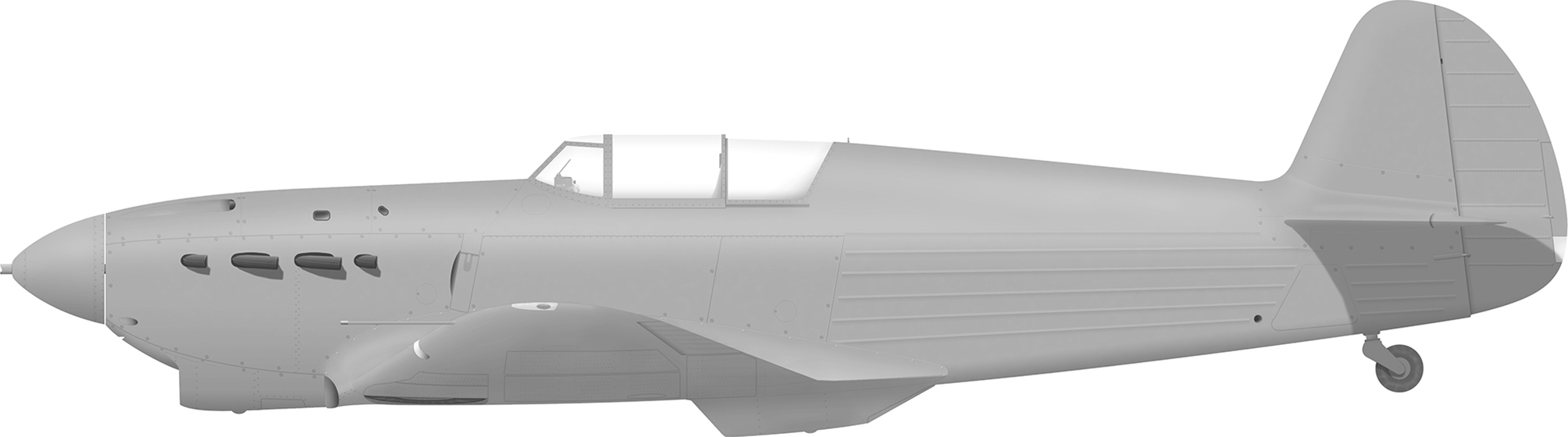
A Matter of Development: Spitfire vs Yak Fighters


If the question were asked, "Which was the most widely developed fighter aircraft of the WW2 era?", most observers and dedicated historians would likely answer with the Supermarine Spitfire. And rightly so-- it was indeed most impressively transmogrified into a plethora of types and roles. The basic airframe proved adaptable to many mission types, and even more importantly, perhaps, it regularly received increased flying horsepower. Lots of power. And it was this observation that got the author thinking about the differences between the Spitire family and the Yakovlev, about how they compared and contrasted, and wondering what role available flying horse-power played in these matters? It's an esoteric question-- to be sure-- but herein are some thoughts on this ponderous topic.

The Beginnings

The first Spitfires entered service in 1938, and the Yak-1 at the end of 1940 (as the I-26, actually). The Spitfire Mk I in its mature form was powered by a Merlin III with 12 lbs. boost, and although rated at 1030 h.p. it gave, in fact, a maximum of 1225 h.p. at altitude and full power. The Yak-1 entered service with the 1050 h.p. M-105P, which produced a maximum of 1050 h.p. at altitude and maximum boost. Ergo, one may see that the first Spitfire had as much flying horse-power as most Yak fighters did in 1945! And that was two years before the Yak even existed! It was a considerable head start, and one can see why the Spitfire became heavier and more complex, while the Yak family became more refined, during their respective subsequent development.

In terms of performance the two machines were quite similar. During the first half of 1941 a Spitfire Mk II had a maximum speed of 581 km/h and a Yak-1 561 km/h, an Initial Climb of 895 m/min vs the Yak's 918 m/min and both had modest armament. The Spitfire turned better and the Yak-1 was more nimble.

(Data from Fighter Aircraft Performance)
max speed S.L./Altitude initial climb / to 5000m  avg. power-to-weight wing loading @ take-off
Spitfire Mk II 494 / 581 km/h 895 m.min  / 5.2  min 0.441 hp/kg 104 / 139 kg/m²
Yak-1 (early) 469 / 561 km/h 918 m.min  / 6.5 min 0.359 hp/kg 158 / 190 kg/m²

Simultaneously, the Yak-1 had been developed into a superlative training aircraft, the Yak-7UTI. It was the finest intermediate AND advanced training machine in the world the day it was built, and remained so (via the later Yak-7V) until at last no more were left in flying condition in the late 1950s. The Spitfire was produced as a two-seat trainer only after the war, and while the T.9 was competent, surely (and still making very good monies for their respective operators!), it cannot possibly be compared to the Yak-7 in this role.

During the latter half of 1941 the Spitfire stole a march on the Yak-1 with the new Mark V. Performace was improved suitably, but the most important modification was to drastically boost its striking power with two 20 mm Hispano cannon. B-wing models suffered from limited ammunition (via a 60 rds drum), to be sure, but this was a most powerful weapon and proved to be a major success.

Mid-Series Development

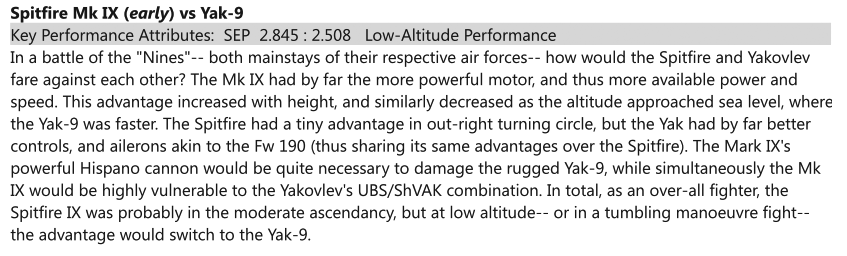
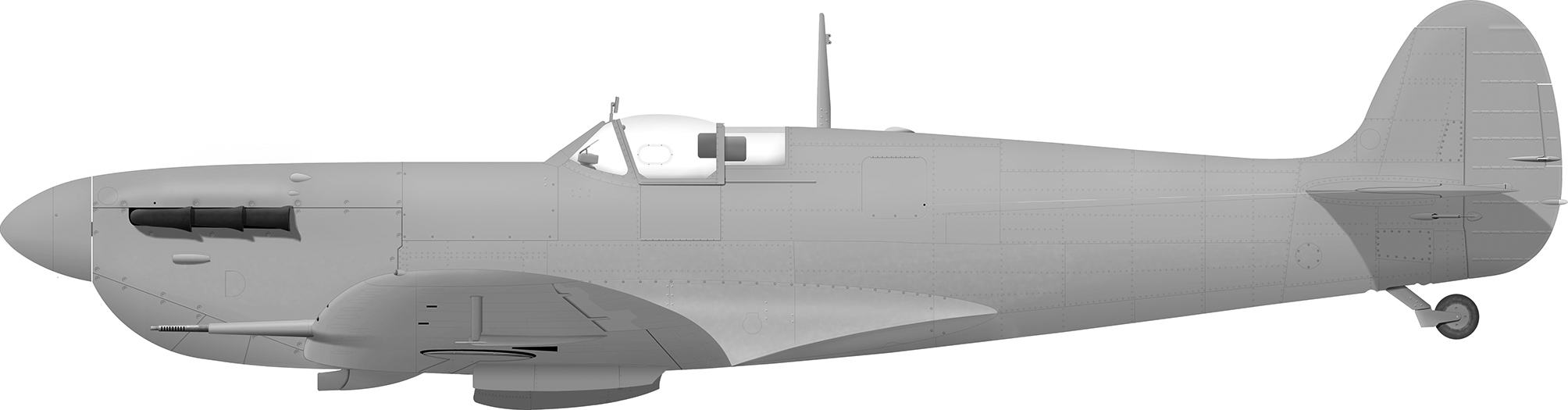
The year 1942 brought new engines to both designs. The Spitfire was married to the Merlin 60-Series engine with great haste as a reaction to the new German fighter, the Fw 190. It is true that early Mk IX examples were a lash-up, and later performance figures for mature versions cannot realiably be applied to these examples. Nevetheless, the increase in flying horesepower was formidable, a mature Merlin 61 generating nearly 1600 hp with 18+ lbs boost. The Yak-1 and Yak-7B, at the same time, received the 1210 hp M-105PF motor. Both gained around 30 km/h in maximum speed as a result, and improved climb performance, but with so much available power the Spitfire IX was well ahead in these respects.

There were many detail modifications to the Spitfire around this time, as well. A new C-wing was developed which could accommodate many armament lay-outs, and in the odd case even four Hispono cannon. Tropicalisation and desert filters emerged along with models to make use of these items. Bomb and drop-tank racks appeared. Tactical camera versions were developed along with specialised, long-range and un-armed PR photographic variants. A high-altitude Mk VI was built, and altitude-calibrated versions of the Merlin (LF, HF, etc) engine proliferated.

At the very end of 1942, when mature mass-produced versions of the Mark IX were at last delivered, the Yakovlev bureau launched their new Yak-9 into production. Everything about this machine had been evaluated and re-evaluated. It had an all-new wing of advanced construction, and many small aerodynamic improvements. Despite being powered by the same old M-105PF, it could reach 600 km/h at altitude and 531 km/h near the ground. Its rate-of-climb was excellent, and it was even more nimble than the already impressive Yak-1 and -7. On such modest flying horespower, it is impossible not to regard the aircraft as a sensational aerodynamic triumph. A comparion to the Spitfire Mk IX is most intriguing, and was the subject of special attention in Fighter Aircraft Performance.


1943 witnessed the development of the aerodynamically improved and streamlined Spitfire Mk VIII. There was also a dedicated high-altitude Mk VII (with extended wing tips). However, the most dramatic development in the Spitfire family yet seen was the introduction of a navalised Seafire variant for carrier operations. These models featured inferior performance to their land-based equivalents, and yet despite this fact they were still formidable as carrier based fighters. Tragically, as effective as the Seafire was in the air, it was equally woeful in carrier operations and deck handling. It was by no means uncommon to see a Naval Squadron on the type complete a very successful sortie against the enemy, only to then lose the majority of the participating aircraft while trying to land on the carrier. One wonders aloud how the Royal Navy ever tolerated this situation? Of course, Carrier Operations did improve after the war, but the Seafire was never a sea-going success like the Hellcat, or even the Firefly.

The relative failure of the Spitfire in this role allows one to contemplate how the Yak family might have done were it developed into a navalised version? Likely the Yak-9 would have been the chosen model, and extreme STOL tests were carried out at the NII VVS on various versions. With wide-track undercarriages and excellent low-speed handling, it is hardly surprising that the Yak-9 found these trials to be a walk in the proverbial park. More than likely, a Naval Yak-9 would suffer from some reduced performance, but would operate on carriers very well and with great efficiency.

During the same year the Yak-9 was developed in two significant directions. Firstly, the Government was keen to introduce a specialised anti-tank single-seat fighter. Attempts had been made in this regard with the LaGG-3 already, and a suitable gun had been developed (the fearsome 37 mm NS-37). Would not the Yak-9 be a better platform? As a result, so it proved to be, and one need only read the subsequent reams of self-congratulation from the NKAP over the successes of the Yak-9T to get the point. But, within the VVS there was a feeling that firepower in the Yak needed to improve. Soviet pilots tended towards conservative views, and the concept of a "single shot" aviation gun was not popular. After all, there had been many experiments like this before the war (even recoilless rifles!), none of which impressed. But experience with the Airacobra had convinced some pilots that the idea was not impossible; anyone that could hit a target with the 'catapult launcher' that was the Oldsmobile gun surely could do so with the extremely high velocity NS-37. Thus, the Yak-9T to these pilots was the massive boost in firepower they had dreamed of. It was not, one might add, the kind of universal solution that the Hispano was to the Spitfire, but for a competent marksman it got the job done.

The other Yak-9 branch involved extended range and endurance. Above all else, Yaks were primarily escort fighters, and range in this role is essential (just as with USAAF Mustangs escorting B-17s). For many reasons, the VVS were not keen on the employment of droppable external tanks.Therefore, the Yak-9D was modified to carry 650 l in its wings, which gave it an effective operational range in excess of 900 km (or dwell time over the objective in lieu of distance). The Spitfire Mk IX's internal fuel capacity was 386 l, by comparison. Moreover, with the extra weight the Yak-9D experienced diminished climb performance, but in most other respects its flight behaviour was virtually unchanged.

The Final Models

In 1944, the third epoch (if one may put it that way) of Spitfire development took place with the adoption of the R-R Griffon engine. With another major boost in flying horsepower, and a few aerodynamic refinements additionally, the Mk XII and MK XIV were very formidable. As well, the Spitfire family had blossomed into many specialised role versions by this time, some with clipped wings, pointed wings, larger rudders, cut-down rear fuselages, tactical cameras and all sorts of equipment. Spitfires carried bombs and rockets for ground attack, external fuel tanks for extended range and a host of other "accessories" for various specialised assignments. And yet, for all this, these were still fundamentally the original model Spitfire, with fuselage tweaks yes, but still based around that famous elliptical wing and general structure. Over six years of development, the aircraft's weight and available power has risen by 60% (both), and the airframe had accepted these demands admirably. But, it had reached its limit. Whether the subsequent Mark 21 and later machines were actually "Spitfires" was and remains a bitter debate (even in 1944 there was a notion to call new versions the Supermarine Victor), the final answer to which will reside with the reader.

The same year was critical for the Yak, as well. The NKAP was so pleased with the Yak-9D wing's fuel capacity that they applied a rationalised version of this scheme to all of the current models (-9D, -9T, -9M) and then went one better by requesting the OKB to produce the Yak-9DD. This strategic-ranged fighter had an internal fuel capacity of 845 l and weighed 3387 kg at take-off, 85% more than the original Yak-1 of three years before. For the air superiority role the Yak-3 was developed, and although superb in this job it lacked the range and endurance to do anything else. Finally, there was the Yak-9U (of many different machines with this same name!) which at last received some notable increased engine power with the M-107A. When it would function correctly, the M-107A gave 1650 hp, and with this available the Yak-9U was terrifying. Alas, the M-107 was famously troublesome, blunting the impact of the new Yak model and explaining, thus, why no other wartime Yakovlev fighter entered series production with it. Another fascinating 1944 variant was the Yak-9B attack bomber, this carrying up to 1000 kg of munitions internally. At first such an arrangement sounds especially daft, but these aircraft were extremely successful, and afterwards the Government ruefully acknowledged that they should have built more of them. This concept, however, of the fighter turned into proper bomber is still prevalent with designs such as the MiG-27 and Su-34, and can be traced directly back to the Yak-9B.

An Analysis of Development

Taking into account all of the above, how would one subsequenly analyse the respective development of the Spitfire and Yak fighters? A number of methods present themselves, such as to consider the combat potential of any specific example, or the differences between the early and late models, or the relative components of improvement for each type (engine, airframe, armament, protection, etc), or even to quantify certain variables such as the time and place of deployment and the relaitve effect this might have had on the military situation. Possibilities abound, and who can say which would be the best? To the author, the relative development of these aircraft can be split into two main categories: aerodynamic refinement and available power. Indeed, the author would further contend that this pattern is evident in the development of aviation globally throughout the 1930s to the 1940s period. As to the diversity of their respective development, that may be visualised via some simple graphical aids. And so, does diversity + quality = breadth (or scale) of development? Let us take a look...

As regards engines, there is only one winner: Rolls-Royce. The Klimov M-105 was competent and reliable, most certainly, but it was not in the same category as the Merlin, nor the later M-107 even remotely close to the Griffon. R-R designed the finest piston-engined V-12s of their time, perhaps ever built. These were the gold standard, world-class aircraft power-plants, and remain so to this day. To provide the Spitfire reliably with ca. 1200 hp in 1939 was exceptional and ahead of the global curve, and on this basis alone one might state that the Supermarine Spitfire was the best fighter in the world at the start of WW2. The Spitfire retained this great advantage in power right up to the end, and no in-line power-plant ever devised in the USSR ever managed even to enter the conversation of equalling the R-R progeny. However, after contemplating this fact, the author was left to wonder whether this superiority in flying horse-power was in fact a boon, only, or could it have been a kind of hidden limitation?

The Yakovlev OKB were unmitigated geniuses in the matter of aerodynamic refinement. To have achieved what they did on such trivial horse-power seems beyond belief. But, they concentrated in this area for the specific reason that they had no other choice: the Soviet aero-engine industry was not on par with the British (nor German, nor American, and so on), nor would it ever be. They quickly realised that there was not going to be any serious increase in available power, and thus it was best to concentrate on what they could do (and to be fair, to play to their strengths), and that meant structure and aerodynamics. Supermarine designers knew that they could very reliably expect increases in Merlin hp ratings on a regular basis, and this was absolutely proven to be correct. There were, structurally, minor modifications to the airframe, the majority of which involved strengthening and improving the ailerons, but nothing more than that. The basic Spitfire airframe went unchanged; there was never any sort of lightening program, nor significant aerodynamic refinement, nor anything of this sort. Therefore, was it the case that Supermarine thought they had designed the perfect airframe in 1938, or that, simply, without the pressure on them to look for improvements here (bearing in mind the continuous increase in engine output) that they just did not? Necessity is the mother of invention, after all.

One can look at this in another way. Assume that the respective design bureaux were suddenly presented with each other's aircraft; what would they do? The author is sure that the Supermarine designers would have developed the Yak in the same manner as a Hurricane, to whose eyes it would greatly resemble. They would likely have moved the fuel into the fuselage and installed four Hispano in the wings along with bomb racks. Indeed, the design might even have supplanted the Hawker classic, as it would have done the same jobs assigned to it even better. An anti-tank version would have been straightforward (as with the Hurri Mk.IV), and a navalised model as with the Sea Hurricane. Indeed, this naval machine might have been given a second seat (a la the Yak-7) to replace the Fulmar, and perhaps an all-metal wing (vs the Firefly). It would have excelled in this role. Thus, the Supermarine Yak would have done sterling work, certainly, and might have been widely developed and deployed, as discussed. It would have been valuable addition to the war effort, but it would never have blossomed into anything like the outstanding fighter aircraft that it became in VVS service.

What of the Spitifre under the direction of the Yakovlev OKB? Immediately, the fuel would have been moved from the fuselage to the wings, and the armament to the fuselage in its place. With such a large nose, the two Hispano could have been retained, or perhaps one cannon with two machine-guns above (as the typical Yak fitment). Work on the wings would have started at once, new wing tips and ailerons being designed as a matter of rapid course. A thoroughgoing weight analysis would have followed, and who can say to what effect? Albeit, the Yak's structure was lightened repeatedly with no loss of sturctural integrity, and likely the Spitfire's would have been, too. The landing gear likely would have been replaced, and of course proper armour and anti-fire systems installed. Looking to the Yak family, the design would likely have followed similar paths, with extra fuel in the wings (a la the PR series) as with the Yak-9D, a cut-down rear fuselage, and an anti-tank model mounting the NS-37 (which would have fit nicely). And why not a specialised short-range air-superiority variant like the Yak-3, with reduced wings and twin-Hispano armament? The author thinks such a version might have been sensational. Ergo, minus a bomber version (the Spitfire fuslage would not have permitted it), the aircraft would have been improved in the same manner as the Yak family, and probably with equal success.

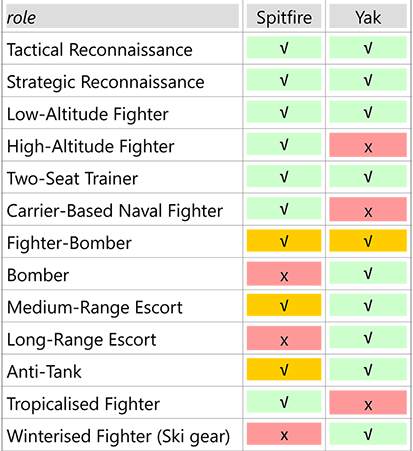
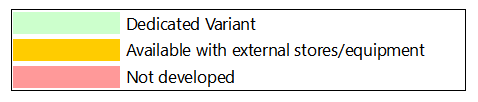
Regarding the number of versions which were actually developed per the respective types, the following table should be illustrative.


One can see that both families were widely developed into many roles, the mark of a great design. But, there wasn't a lot to choose between them. Perhaps, on the basis that the Spitfire was so thoroughly developed as a carrier fighter, one could realistically plumb for it in a comparison, but bear in mind equally that the Yak was just as long lived in the training role, and in which it excelled. As well, with such large amounts of available power, role adoption in the Spitfire was mostly a matter of attaching things to the bottom of the aeroplane. In the Yak, the design itself was modified, structurally and aerodynamically.

The author submits that this same pattern was seen globally, and it is the very thing which sets the Soviet VVS apart. Western aircraft development was always primarily about engine horse-power. Supercharging, chemical boost, turbo-charging, water injection, experimental valve types, dry sump systems... the list is endless. When advancements occurred in fighter aircraft designs the reason was always a new engine. How much refinement did one see in the airframe of a Mustang; a Bf 109; a Spitfire; a Ki-61; a C.202...? All of these were transformed when better engines arrived. Yes, at the end of the war there were Mark 21s and a lightened H model P-51s and even a P-47M or a G.55, but these were not thoroughgoing transformations of their respective structures as one might see looking at a Yak-1 vs a Yak-7 vs a Yak-9 vs a Yak-3. This was the collective special genius of the Soviet Design Bureaux: with nowhere else to turn, they embraced aerodynamics like no one else, and the sheer cleverness of their designs show it. Could other aviation designers around the world have done similarly? Why not? But they didn't have to, what with such powerful engines appearing regularly, and so... well... they didn't.

Final Words

The Supermarine Spitfire was a marvellous design, one to be justly proud of. It was successful in many roles, and long lived in front-line service around the world. But for all that, one gets the impression that more work could have been done on the airframe. What might have happened, for example, in 1942-43 had R-R not perfected the 60-Series Merlins? Were there enough differences between a 1938 Spitfire airframe and a 1942 model even to make a small notebook? After four years (three at war)? The RAF themselves admitted in full that the Fw 190's airframe was better than any of theirs, and that this was the source of its current ascendancy. The situation might well have become a disaster, but it was averted as always by advancements in engine design, not in aerodynamics.

In the author's view, this was just not good enough. At Supermarine-- and North American, and Messerschmitt, and FIAT and Mitsubishi-- they ought to have done better. Rolls-Royce fulfilled their role superbly; one could not realistically ask for more than they accomplished. Daimler, Pratt & Whitney and others likely did so, as well. But their corresponding aviation design teams and companies...?

Aleksander Yakovlev's bureau showed what could be done under perilous circumstances and with scant resources. They were unashamedly proud of their accomplishments during the GPW, and rightly so. In terms of sheer quality-- skill and imagination-- was not their work superior to others'? Food for thought. But, despite the fact, the first name that comes to mind for many with respect to such questions as the "Most Developed" is inevitably the Spitfire. And... well... should it do?

---------------------------