Is there
a more stately, charming or just plain interesting aircraft than
Tupolev's ANT-6 design? For the author, it's hard to think of one. But,
for all of this admiration, what do we really know of this somewhat
early design, its versions and its finish in military service? Any
attempt to understand the TB-3 is a bit of a journey into the unknown.
It was made and placed into service during a period which is not
especially well documented nor understood. Thereafter it soldiered for
a very long time, some examples more than decade after they were built.
The photographic record of the type is poor, and what we do have is a
confusing assortment of mostly German film types.
This article-- to appear in several parts-- will attempt to address
some of these questions. Some better-- and lesser-- known examples will
be analysed and presented in profile. From these studies, perhaps we
can advance our knowledge of this wonderful giant, and re-visit some
very old and by now tired assumptions about the appearance of these
wonderfully improbable aerial contraptions...
Part 3, The Civil Aircraft
It is a matter of the utmost irony that Tupolev, himself, regarded the
ANT-6 as primarily a civilian design, when in fact the machine is most
remembered in its military form as the TB-3. And indeed,
subsequent production of the type was essentially split between civil
and military models, adding all the more weight to the Bureau's ideas.
This fact, in turn, leads us to yet another ironic observation that--
despite the formidable numbers of such machines in service, and for
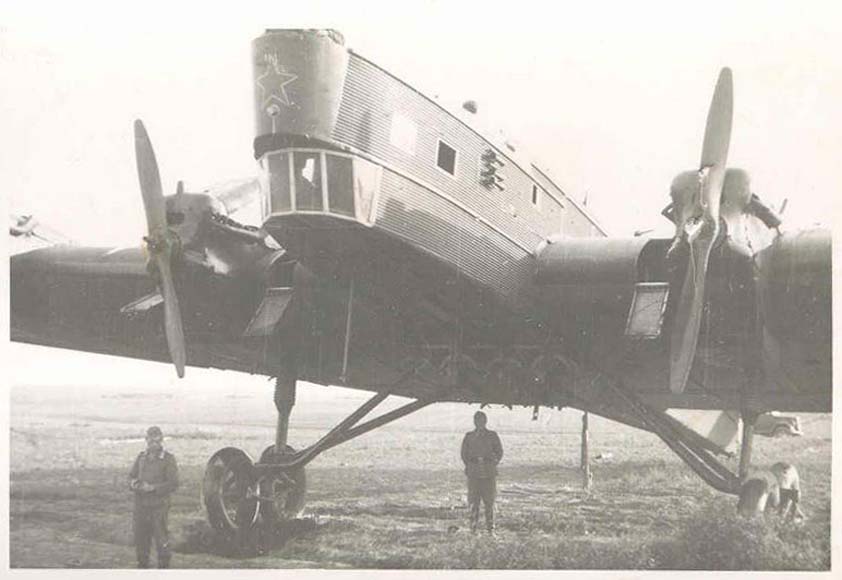
years-- photographic documentation of these ANT-6 and G-2 models
remains 'limited' to put it mildly. One might remind here that
photography of aviation subjects in the USSR was not at this time
'profligate'-- and that is true-- but the sheer lack of surviving
images of civilian ANT aircraft is curious, and more so it is annoying.
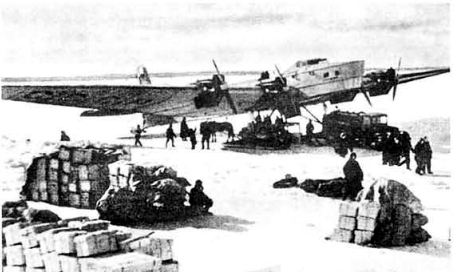
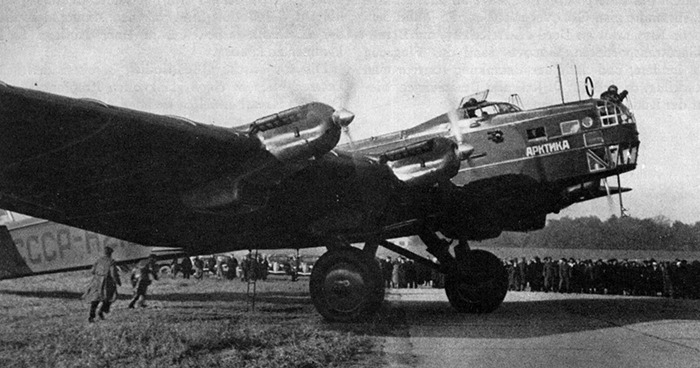
One specific species of civilian ANT-6 models was well documented, of
course, those being the heroic machines of the Antarctic Flight Service
(Aviaarktika). The sheer number of records achieved and pioneering flights undertaken by Aviaarktika
are simply breathtaking, and quite in fact the majority of these stand
today, still not bettered after nearly 90 years. These machines were
purpose-built for this work, and were designated ANT-6A (for 'Arktika')
as a result. ANT-6As were effectively all hand built, no two examples
being entirely alike, and each fitted for the specific mission or
expedition they were to undertake.
If the Aviaarktika examples were the glamorous 'movie stars' of the Tupolev world, then one might conclude that the civilian G-2
(Grazhdanskoy) was the unfancied 'ungainly step-sister' of the family. Despite having
served, for example, in Aeroflot in their hundreds, and indeed on some
of the most important routes across the USSR and adjoining states,
there are in fact virtually no images of these aircraft.
A handful at most. After such service? It's a grand curiosity, indeed.
Mind, the author cannot image that these ANT-6s were very comfortable
nor especially well appointed, and perhaps their service in Aeroflot
was seen as a period of strict functionality, not suitable for its
post-war image nor advertising?
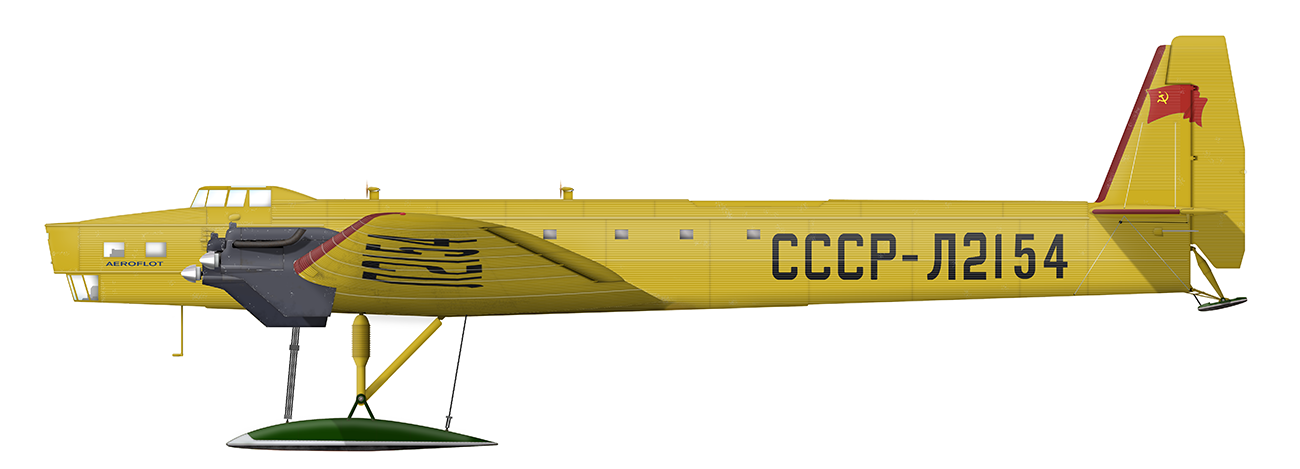
G-2 4M-17F SSSR L2154
L2154 was photographed operating in the Polar zone, complete with ski
landing gear and Arctic Yellow livery, but indeed this machine belonged
to Aeroflot and not to Aviaarktika.
Not surprisingly, aircraft operating in these extremes regarded
themselves as being an elite service, and very dramatic trim and
artwork devices were common on such examples. L2154 was thusly trimmed
lovingly in red and sported a superb Soviet flag on the fin/rudder. The
AEROFLOT text was worn in the usual position here (just below the two
nose windows) on both sides of the fuselage. The engine cowlings were
finished in black, but there was no corresponding wide stripe aft of
these over the wing as on the early dull aluminium style examples.
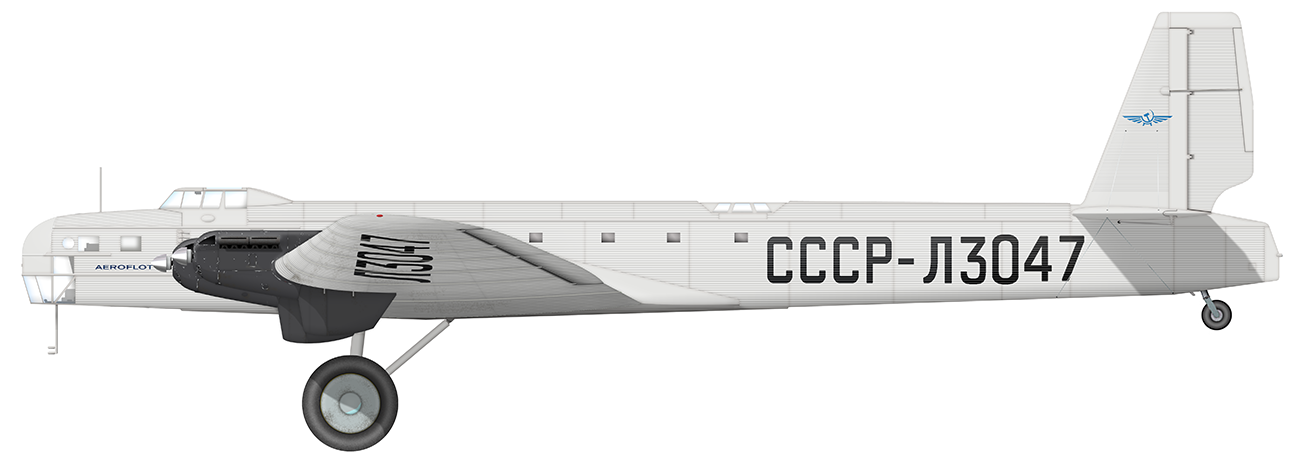
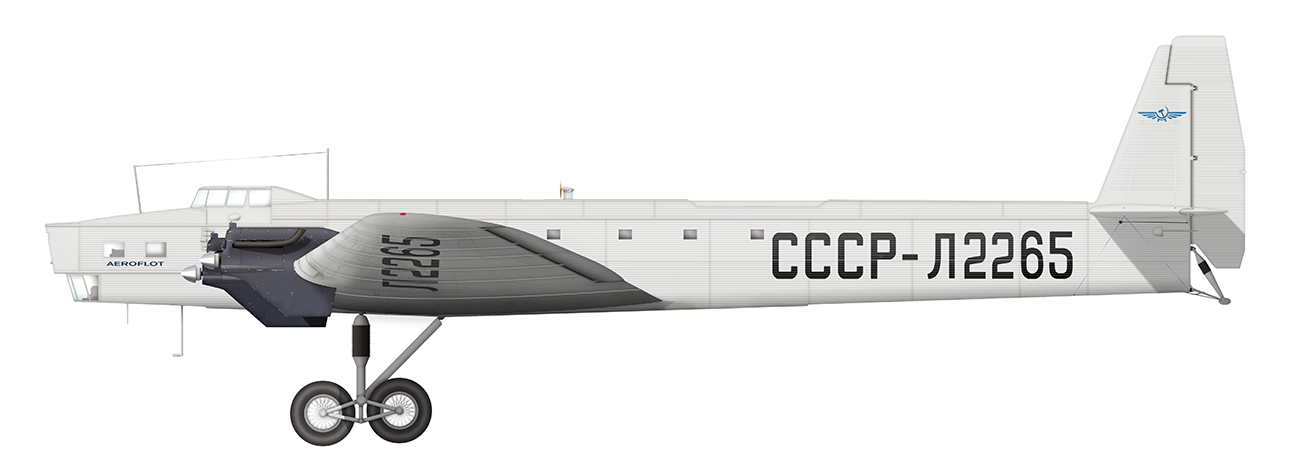
G-2 4M-34RNB SSSR L3047 Possibly the best known of all the civil ANT-6 aircraft was this
example, L3047, which served on the important Moscow-Minsk-Białystok
route. On 31 January 1940, with heavy weather closing in
and darkness falling, L3047 became lost and disoriented, finally
setting down mistakenly on Lyk aerodrome (nearer to Gdansk) in the
German occupied zone. Naturally, the Germans were far from pleased with
this occurrence, immediately placing the crew and all passengers on the
flight under arrest. While the passengers were released, the crew were
interned and interrogated, leading to something of a diplomatic flap
between the German and Soviet Foreign Ministries. The aircraft was
erstwhile test flown by members of the Luftwaffe, and after some weeks
the crew were at last returned to the USSR after Stalin authorised the
shipment of an extra tranche of petrol products to the Reich.
The fate of L3047 appears to be unknown. The aircraft did not return to
Aeroflot service after this incident, and the author could find no
evidence that it returned to the Soviet Union at all. It seems the more
likely that, following some examination by the Germans, the
aircraft was abandoned and subsequently scrapped.
The appearance of L3047 was classic for Aeroflot G-2 airliners of the
period. The finish comprised an over-all light grey paint, which might
have been lacquer AEh-9 if indigenous, or even German lacquer Avianorm 7375
which was virtually identical (as used on Junkers airliners in
Lufthansa service). The engine cowlings were painted black, but there
were no broad stripes over the wings as on the classic aluminium
schemes. According to the airline's own archival department, the
Aeroflot badge on the tail was supposed to be applied in blue, never in red (as is commonly depicted).
G-2 4M-17F SSSR L2256
L2256 was an Aeroflot G-2 operating on the Moscow-Novgorod-Leningrad
route during 1938-39. The aircraft was notable for allegedly carrying
additional radio gear and their associated antennae. "Allegedly" is
indeed the appropriate phrase here, as this machine is in fact known
not from a photograph, but rather from a postage stamp!
Even so, the artwork on the stamp was very clear, and the details of
this example look to have been well picked-out (the Aeroflot badge, for
example, was blue in colour). Nevertheless,the usual caveats must apply
minus a real image of the thing.
The finish seems to have been typical for the time, but the
regustration codes on the wing surfaces appear to have been somewhat
smaller than was typically seen.
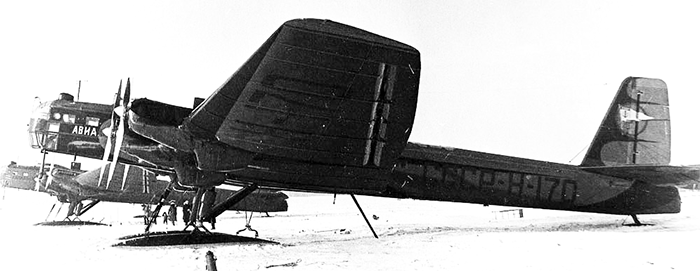
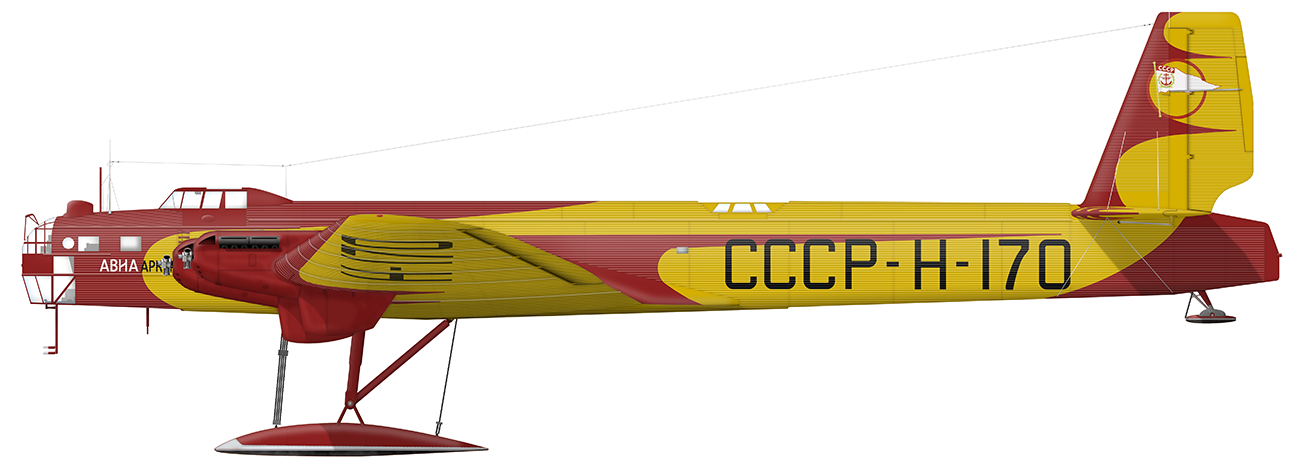
ANT-6A 4M-34RNB SSSR N170
Perhaps the most famous of all the Aviaarktika
examples was good old N170, seen here in its later (ca. 1939)
appearance with VISh-22E propellers. It was one of the first four such
examples built in Factory No 22, along with N169,171 and 172, and full
accounting of this aircraft's amazing service life is outside the scope
of this article. Resplendent it its typical Arctic scheme finish of
Arctic Yellow with AII Red trim, N170 was additionally
embellished with a dramatic Naval Flag artwork on the tail. The
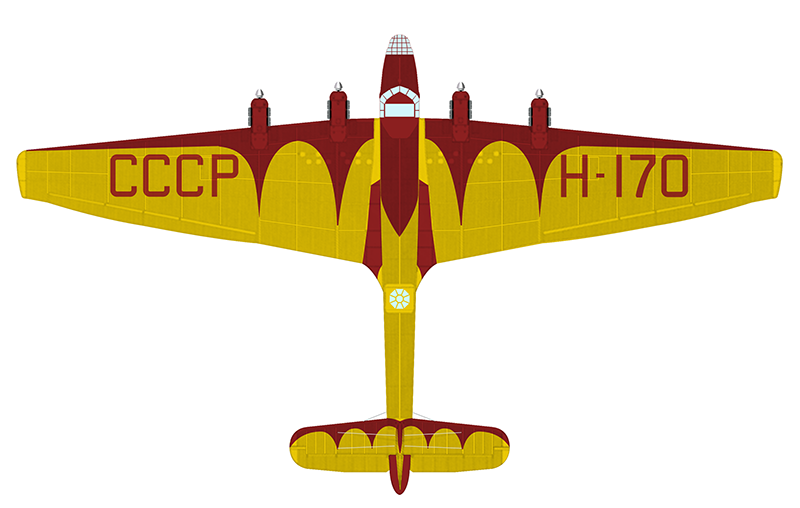
serial codes were finished (at least at this time) in black, except for
the wing upper surfaces which were in red. The AVIAARKTIKA text was
neatly split in white and black for a fine effect.
Upper surface view of N170's trim.
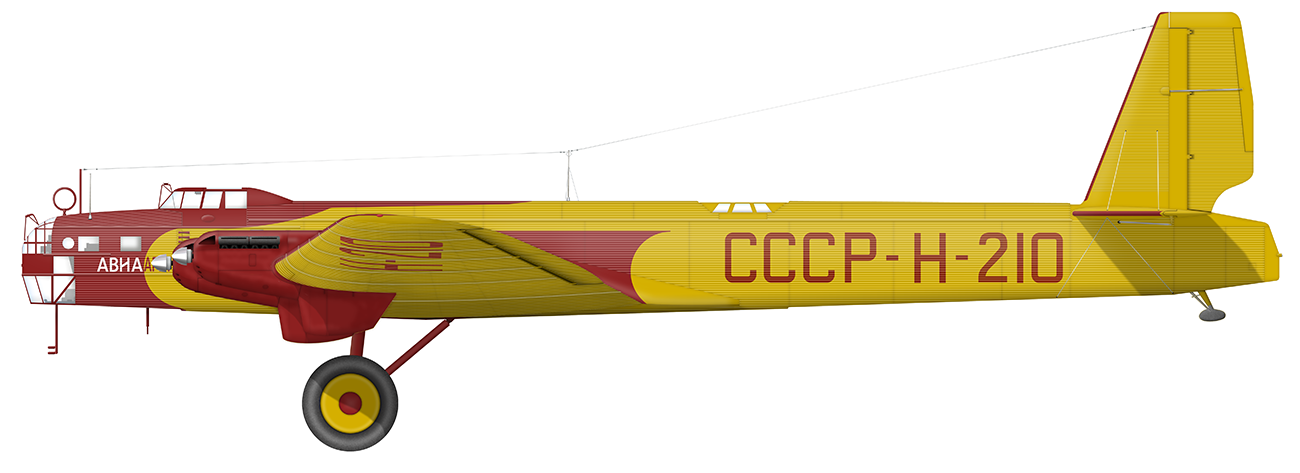
ANT-6A 4M-34RNB SSSR N210
Aircraft in the Arctic zone could operate either on wheels or
skis, and N210 was seen in the former condition. The finish looks to
have been exactly from the factory, with more modest trim and red
serial codes. The proliferation of wires, antenna, mounting brackets
and other masts on these Aviaarktika examples is most fascinating.
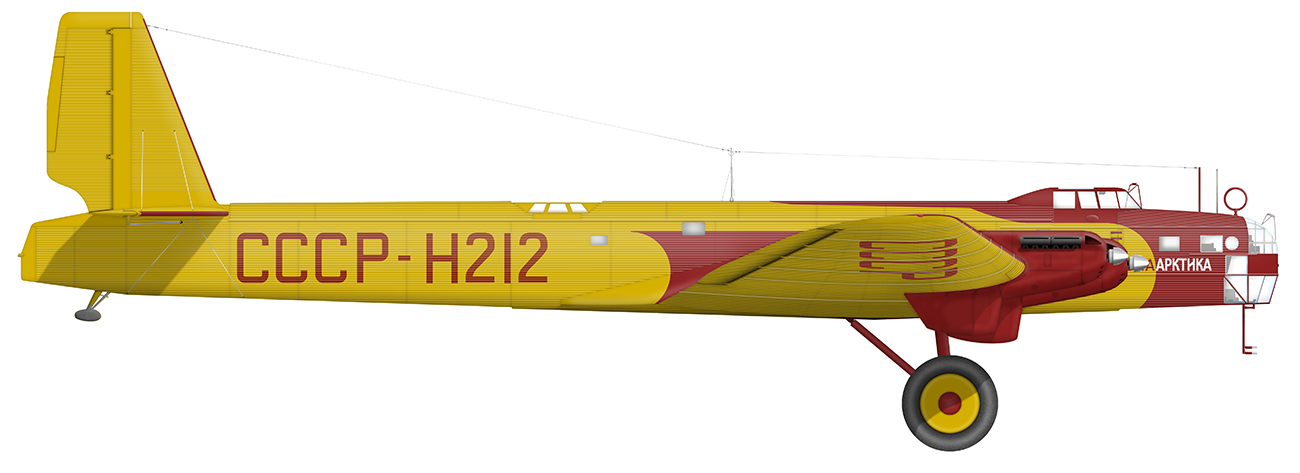
ANT-6A 4M-34RNB SSSR N212
Another factory Arctic scheme may be seen on N212, but differing
slightly in detail from N210. No dash can be seen on "N212" on the
fuselage, and the framing around the nose glazing was entirely
unpainted. This example later acquired a Naval Flag emblem similar to
N170 [see above], and images exist showing N212 on both wheels and skis.
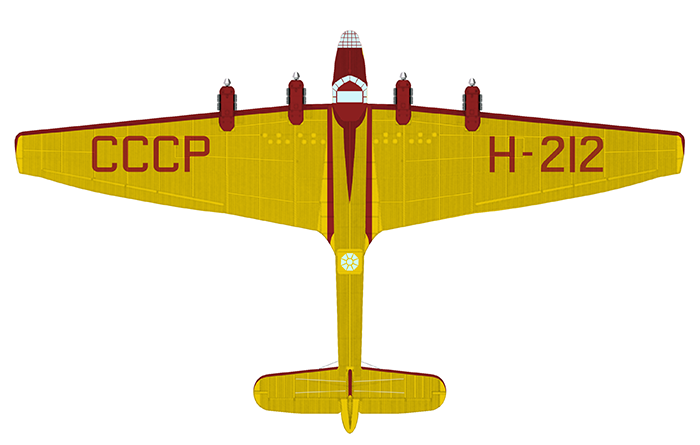
Upper surface view of N212's trim
----------------------------