The second main area of
modification for these Naval machines involved the crew stations for
the bombardier and gunner. In fact, most -G models replaced the
bombardier with four fixed .50 cal guns in a 'solid' nose. For
operations in the attack role this was useful, but increasingly the VMF
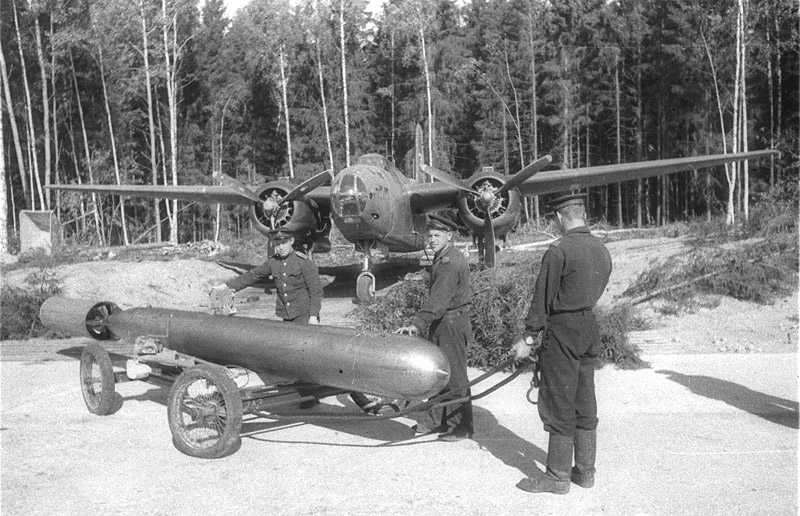
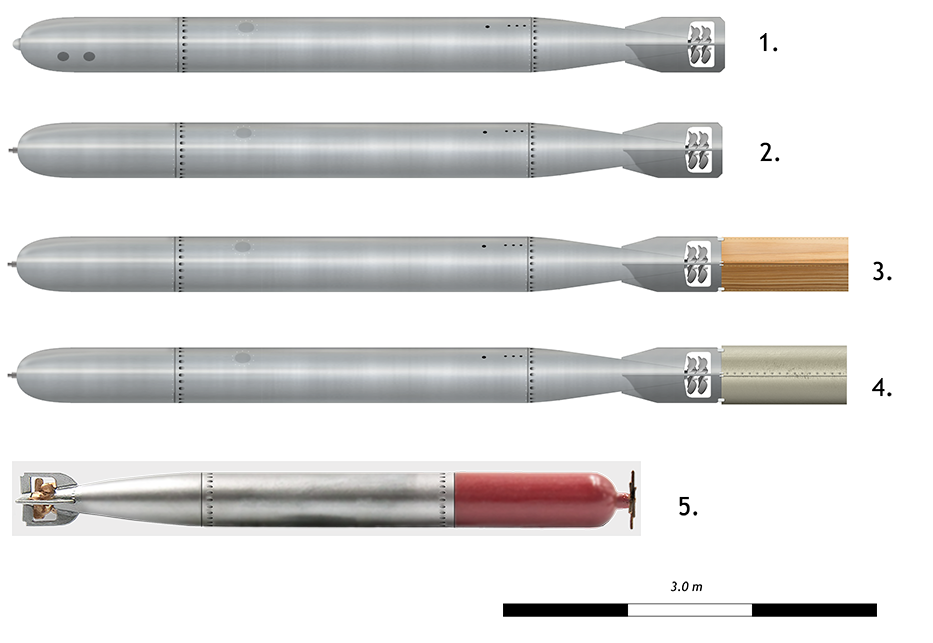
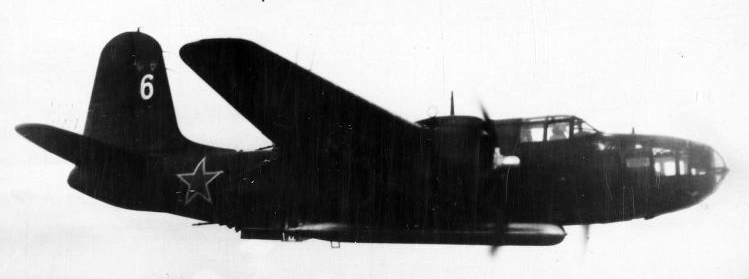
wanted to employ the A-20 as a torpedo bomber-- for a 1000 kg load that
weapon delivered the biggest threat to ships. As a result, many -G
models in the VMF had the bombardier's compartment restored, in these
cases using all manner of window arrangements. Torpedo attacks by
aircraft with a dedicated bomb aimer, of course, obtained much better
results.
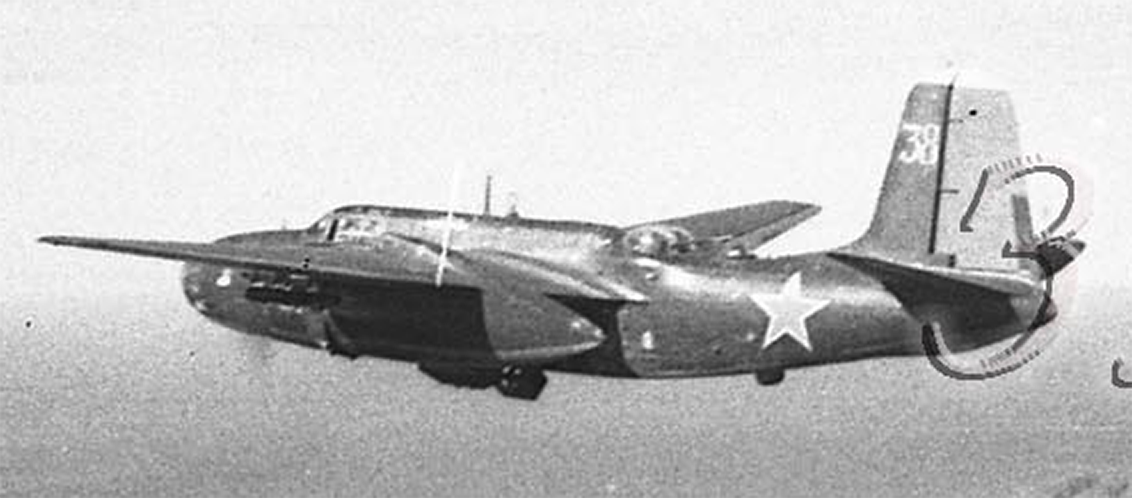
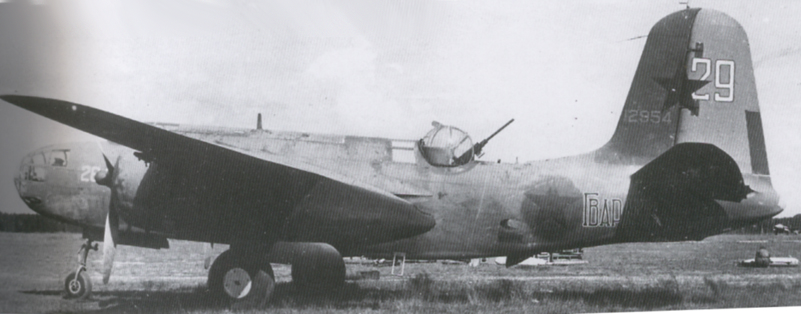
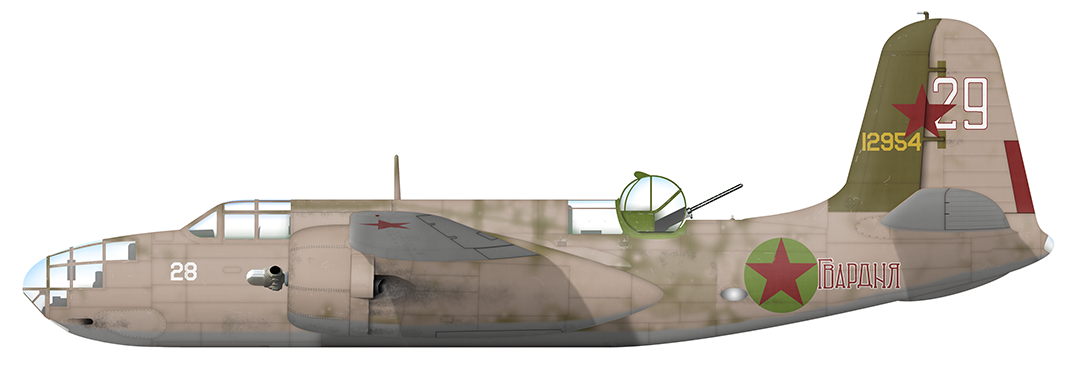
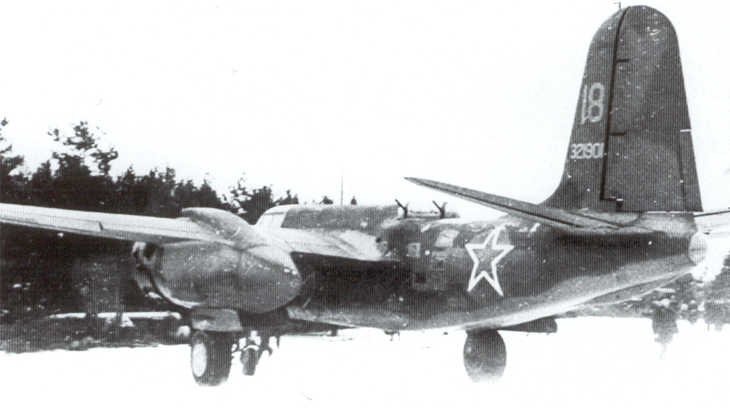
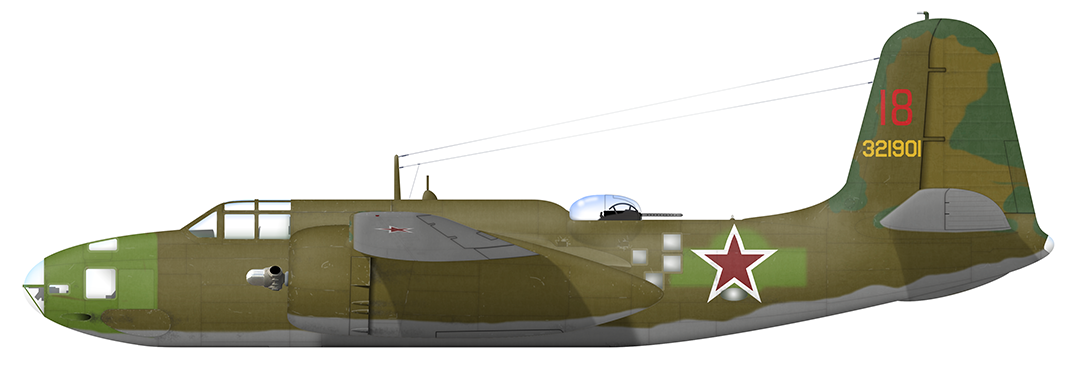
As for the gunner, Soviet aircrew did not particularly fancy the Martin
turret. The unit was cramped, hard to see out of and nearly impossible
to enter and exit during combat flight [recall the the gunner had to
operate both the upper gun/turret and also the lower hatch gun beneath,
thus requiring that they change position]. In its place an MVT turret
was installed, and even though this unit could accommodate only a
single gun (in practice, virtually always a 12.7 mm UBT) it was
considered a major improvement. The .30 or .50 cal weapons in the lower
hatch were also replaced by a UBT in many cases.
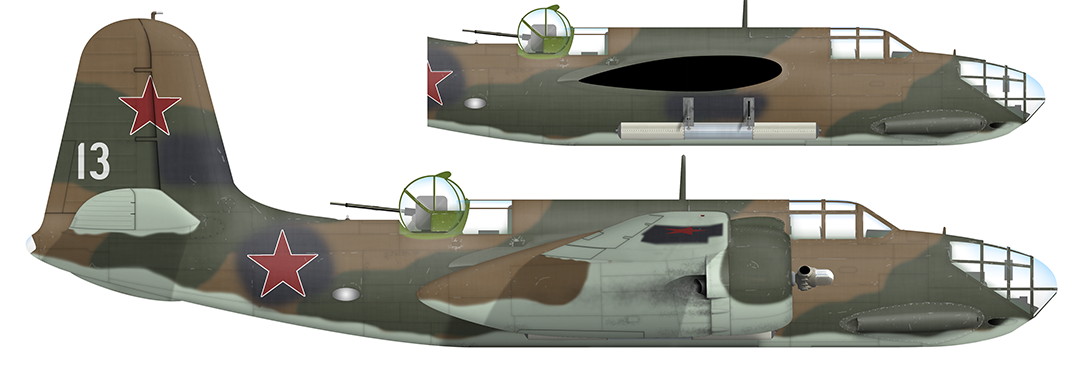
It is impossible to know whether
this machine was actually supplied to the RAF as a Boston Mk IIIA and
then sent onwards to the USSR, or was one of the examples commandeered
at the factory for the USAAF as the A-20C. Be that as it may, the
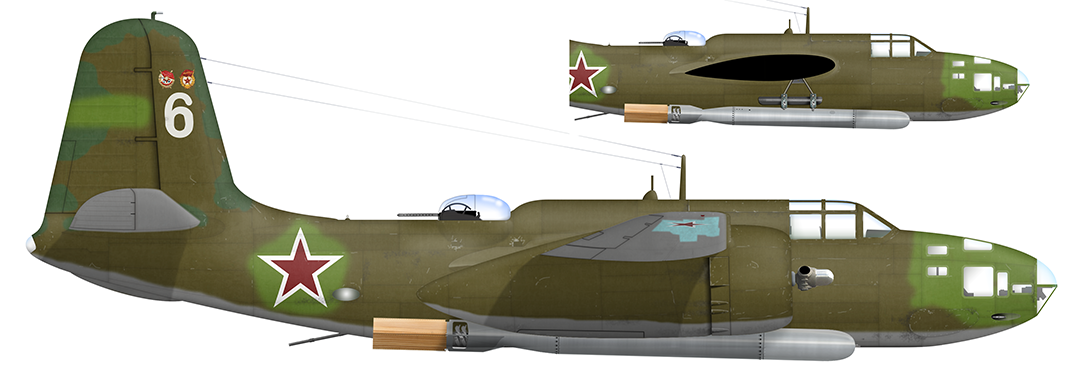
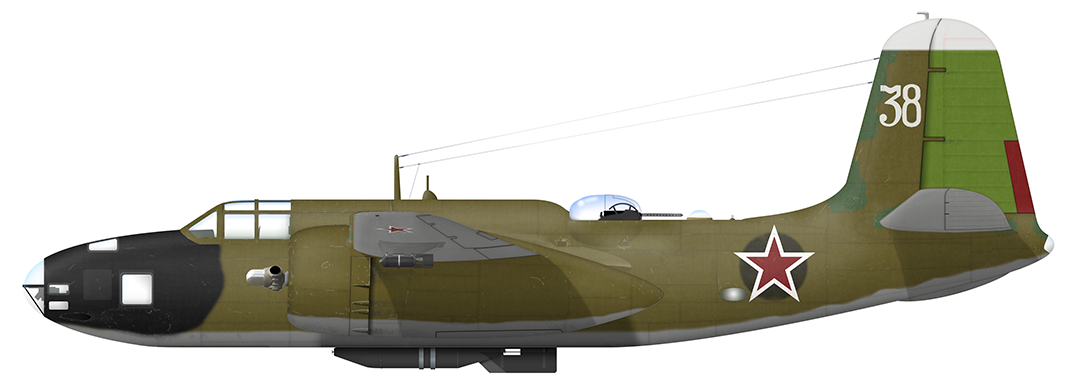
aircraft was subsequently modified with an MVT turret and an external
bomb rack. The rack itself was of a somewhat earlier design than
elsewhere, here shown via the inset drawing [above]. "White 13" was
carrying a British mine Type A when photographed.
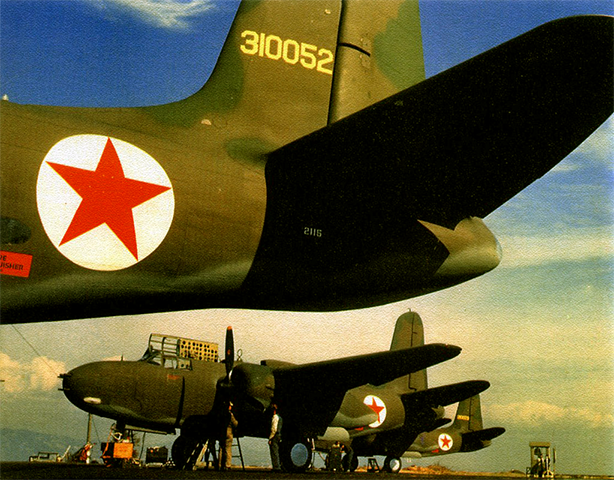
The finish was a classic factory application for export aircraft of Du
Pont equivalents for Dark Green, Earth Brown and Sky [see colour image
above]. Quite often one sees that the VVS used Black paint (and not
AMT-4) to cover up the original markings on these schemes, as no doubt
these shades looked very dark to their eyes. National star insignia
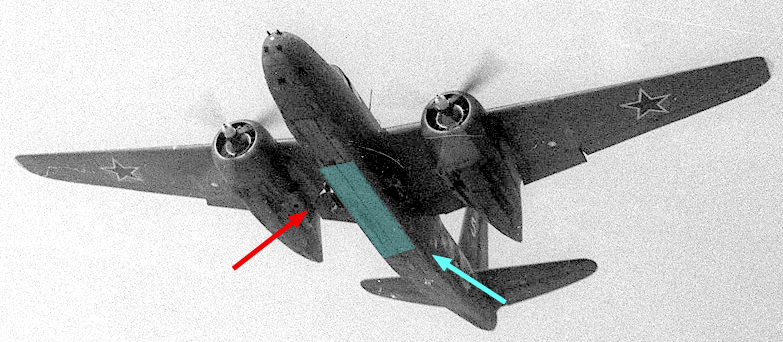
were added with a thin white border, except on the wing unders which
were plain types.
----------------------------
...to be continued in Part 2