A great deal of confusion exists in the minds of many as to the
exact nature of 1930s and 40s Soviet aircraft construction and finish.
What was the actually skinning in use? What materials were employed? In
this article we will attempt to answer some of these questions by
focusing on the I-16 Type 10. The Polikarpov I-16 was built using a
variety of construction methods which neatly define the technology of
the 1930s in the USSR. Many of these same methods would be employed
throughout the 1935-47 period on aircraft of every description, and so
this aircraft serves as a fine example of these practices for our
examination.
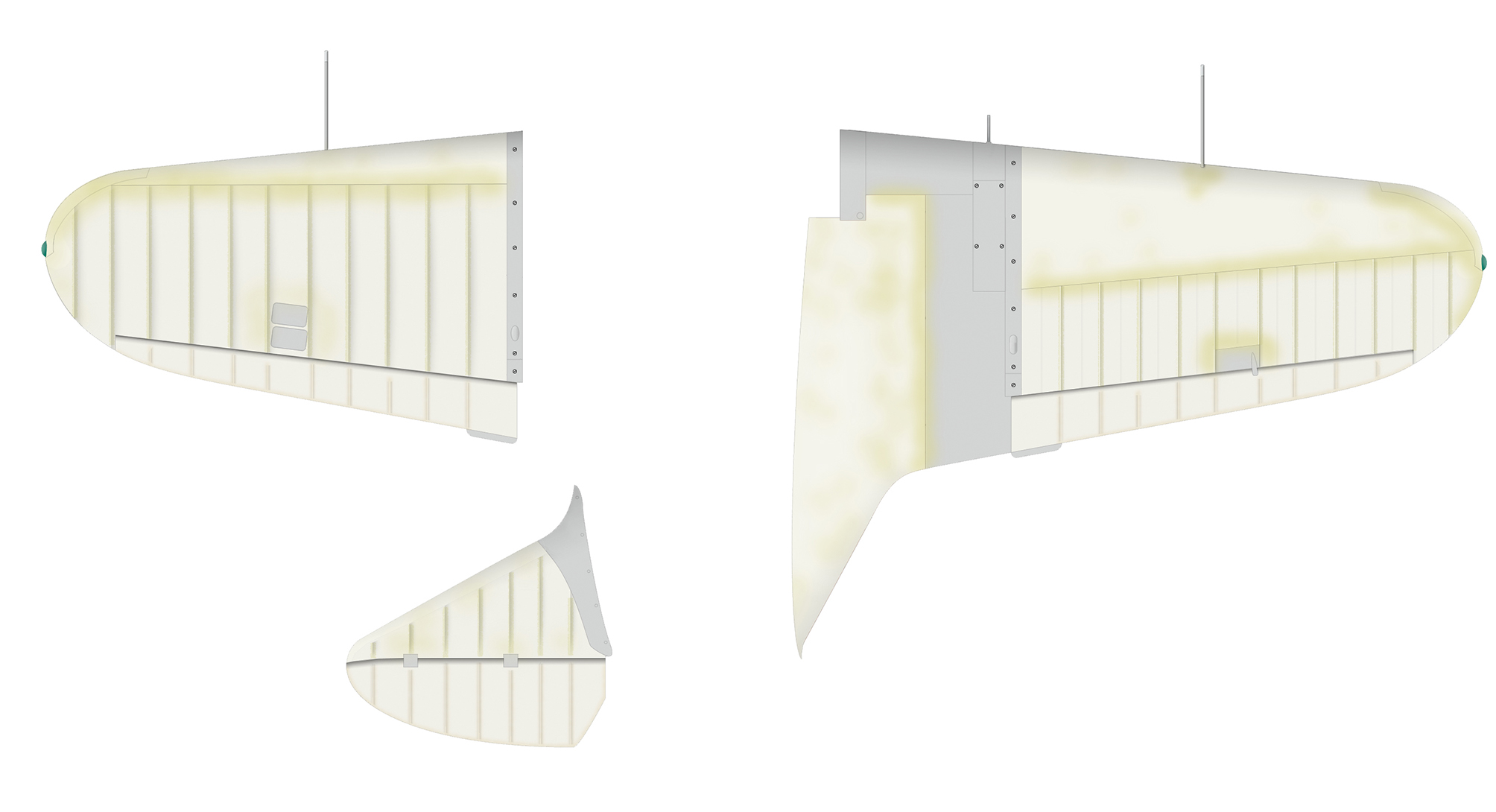
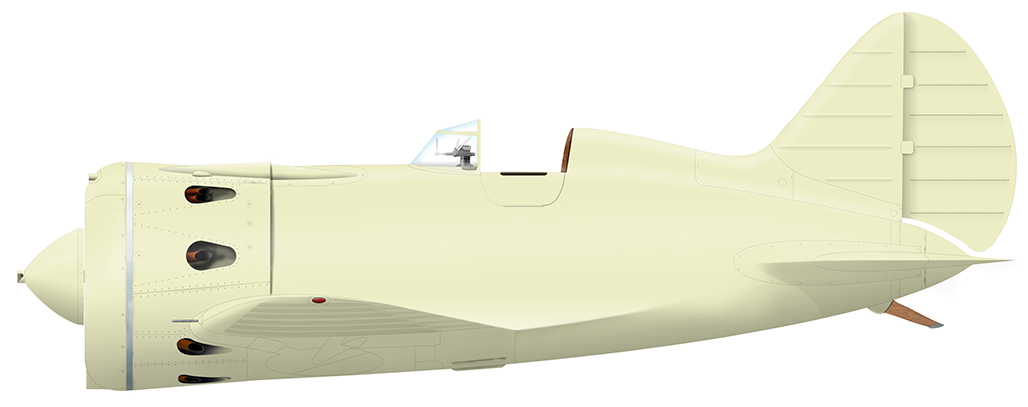
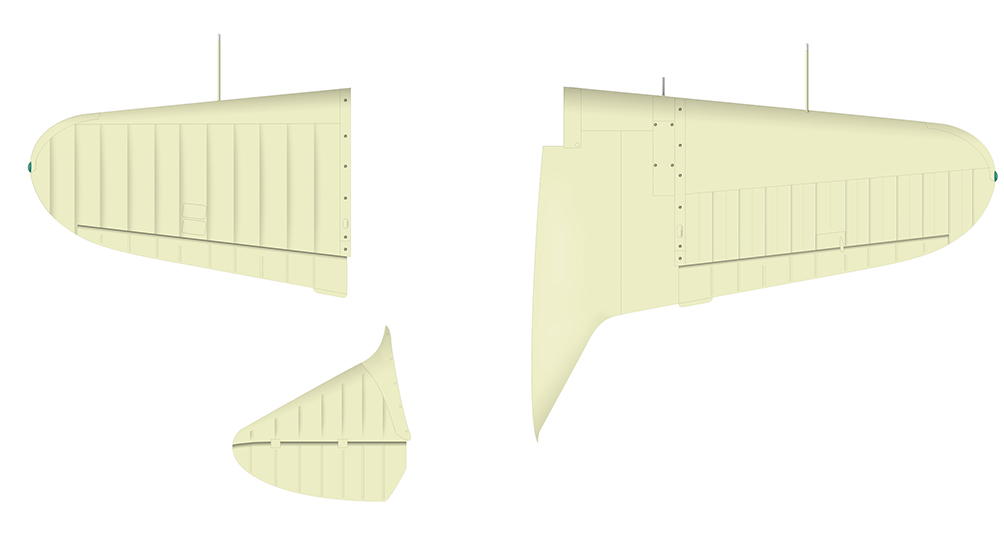
Here is a depiction of the I-16’s surfaces showing the materials used
in its construction, without any further coating or finish. Duralumin
sheet was used to cover the engine (with detachable panels), the
cowling face, the wing inner and leading edge sections, the stabiliser
leading edge and fillet, tail cone and vertical fin fillet. Fabric was
used to cover the main wing surfaces, the stabiliser and all control
surfaces. Pinked fabric strips were applied in these areas over the
major ribs and formers in the usual manner. The cowl band was stainless
steel.
The fuselage and wing root areas were made up of laminated spruce
strips, these wrapped around the shape of the unit over wooden formers.
The wood strips were both secured and impregnated with
phenol-formaldehyde resin, this giving the normally light wood an
orange-brown appearance. A strip of hard wood (usually ash) was
used to blend in the adjoining wing and fuselage sections.
The wing section and cowl featured semi-recessed riveting, with the
moving panels secured by fasteners (dzuz type, mainly). The fillets
were secured to the fuselage using ordinary wood screws.
The fuselage and wing forward sections were then covered in fabric
(common linen). This fabric was impregnated with another type of
phenol-formaldehyde resin, being similar in chemistry to that used on
the wood strip, but clear in colour [this is may well be the lacquer
designated “17-A Clear” as identified by the NKAP’s documents]. The
lacquer served to bond the fabric to the various surfaces and form a
protective coating, both, and gave a flexible, sandable finish (rather
like Fibre-glass). Resined fabric was not applied to areas where
moveable panels were located, and was applied underneath the stabiliser
and fin fillets, which were added afterwards.
With the airframe thusly covered, various amounts of filler putty were
then applied. Special attention was directed at any area where a large
joint may occur, or other un-serviceable gaps, and the putty could be
applied freely over any surface (e.g. shown here to fill dents in the
cowling face) which was not movable. The airframe was then sanded
smooth, attempting to obtain the best aerodynamic surface possible.
In some cases, often relating to specific factories, the amount of
filler putty used could be quite substantial. This was often the case
in early manufacture examples, as the non-skilled work force found
their feet and gained experience in mass production techniques. However
simplistic, the use of filler putty in this way was hugely effective.
Indeed, this method was something of an ideal Soviet solution, costing
virtually nothing (in terms of expense) and yet yielding superior
results via the application of labour.
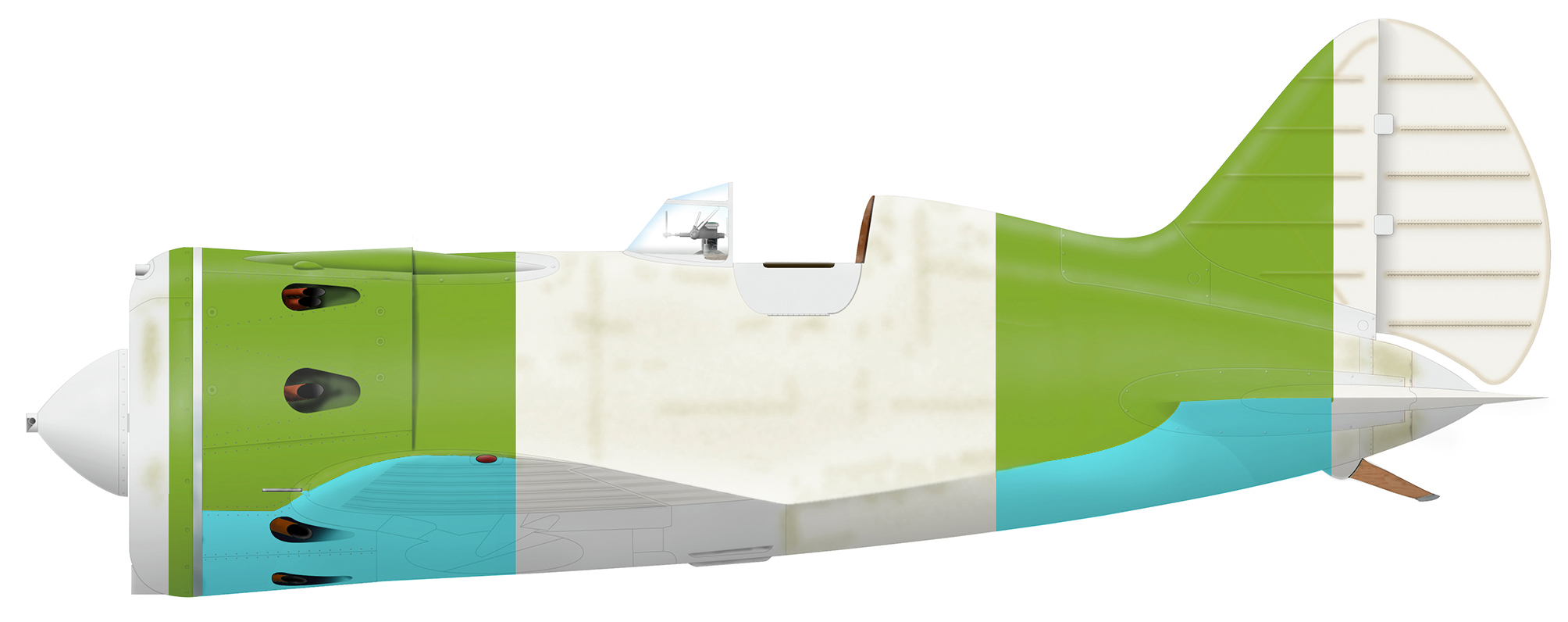
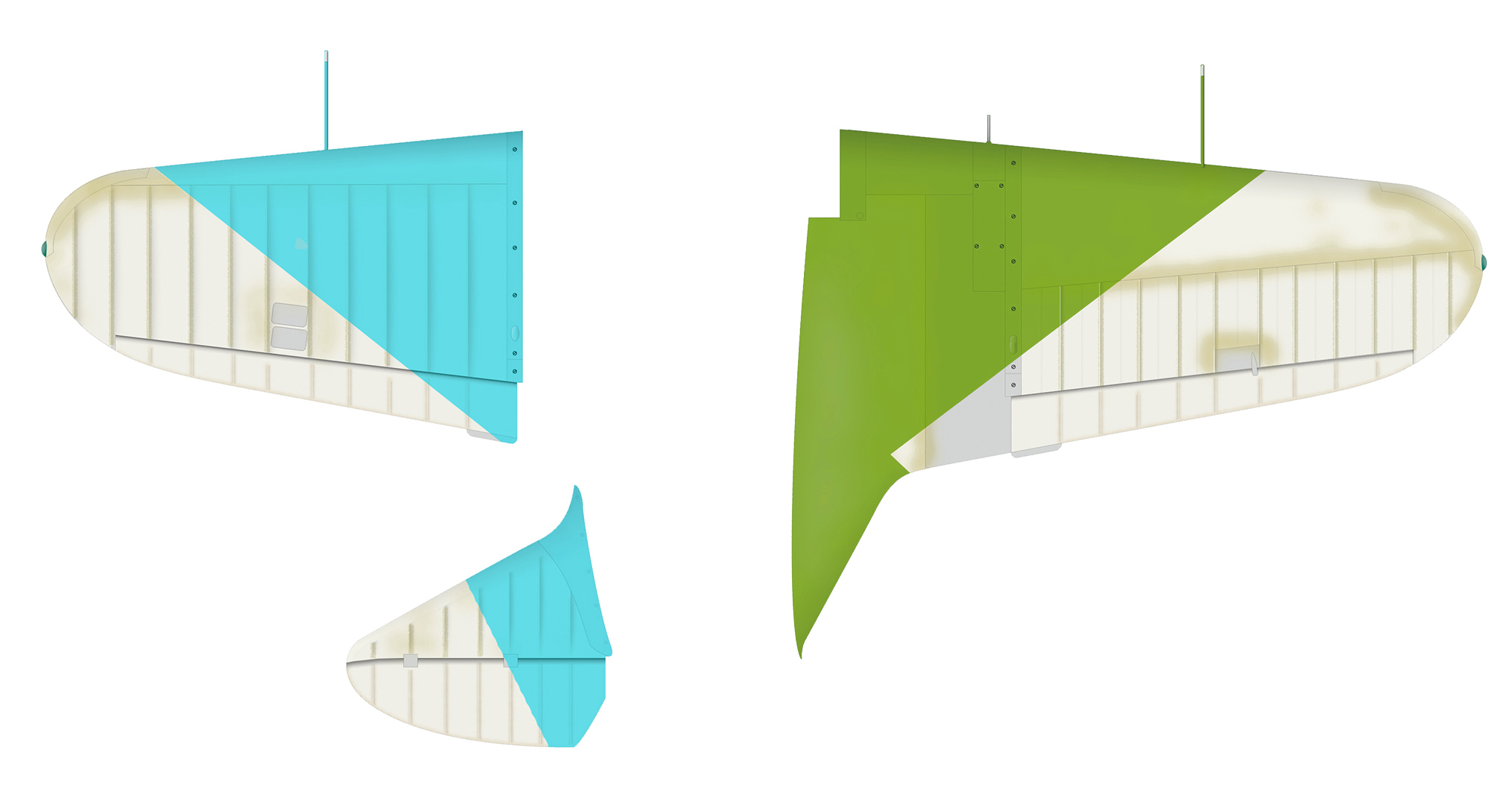
At this point the aircraft was ready for painting. Two distinct methods
were employed in the Soviet aviation industry, and perhaps as expected,
sometimes with further permutations to these, as well. In the first
case, the desired military or camouflage finish was applied directly
over the fabric/puttied airframe. Generally speaking, A, AE, AEh and
AII lacquers all adhered well over such surfaces, and tended to chip
away significantly only over dural sheet areas which had neither putty
nor primer applied to them. AMT lacquer was indifferent to the types of
surfaces to which it was applied.
The second option was to first finish the entire airframe with a coat
of ALG aviation primer. Far and away, ALG-1 was the most common of
these primers used in this way. ALG-1 could also be sanded, when
required, and its colouration was such that it blended together with
the filler putty almost seamlessly. After priming, the aircraft would
then be finished as above.
It was not unknown at some factories, and in certain cases, that part
of the airframe would be comprehensively primed, and other areas not.
It was usually the case that primer was not applied to the canopy
framing, as these were often anodised strip. Paint flaking from these
items is absolutely legion in the photographic record, especially when
looking at non-AMT finishes.
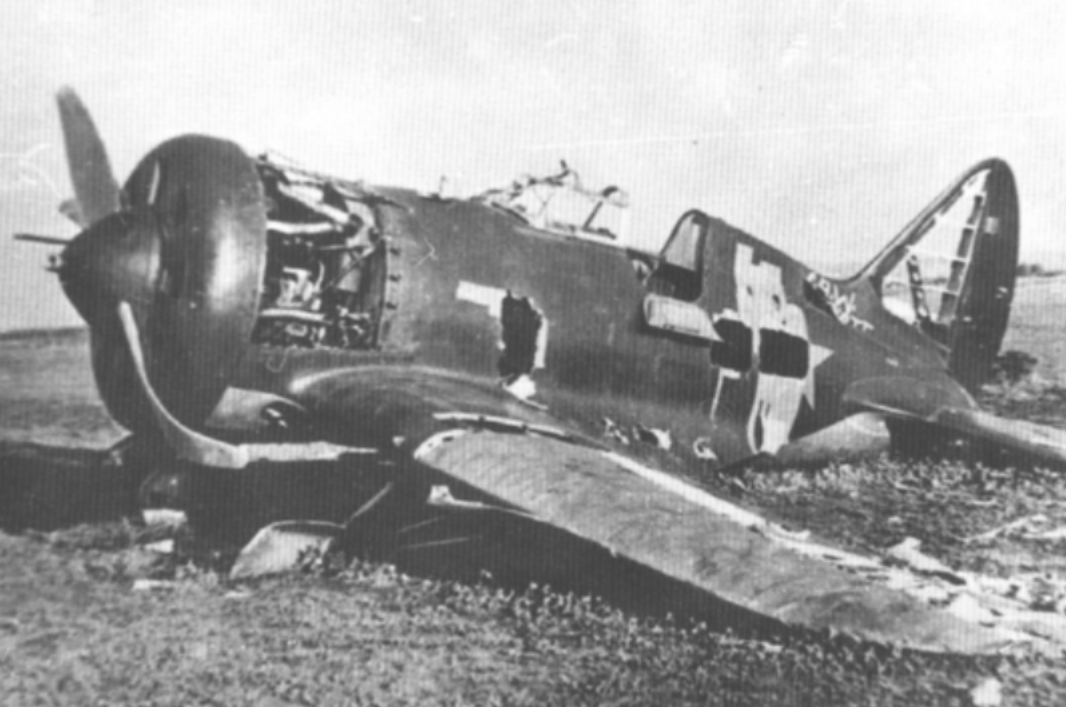
This derelict Type 5 shows typical finishing for the period. Souvenir
hunters have removed much of the fabric on the fin. This was usually
done to obtain the red star insignia, which was obviously regarded as a
highly collectable item. A similar would-be collector attempted to cut
away the fabric over the fuselage, but no doubt found the resined
material to be too difficult to remove. Note that the canopy framing is
mostly unpainted. This appearance was quite typical, the paint having
fallen away almost completely. Indeed, it was sometimes the case that
no attempt was made to paint this framing in the first place.
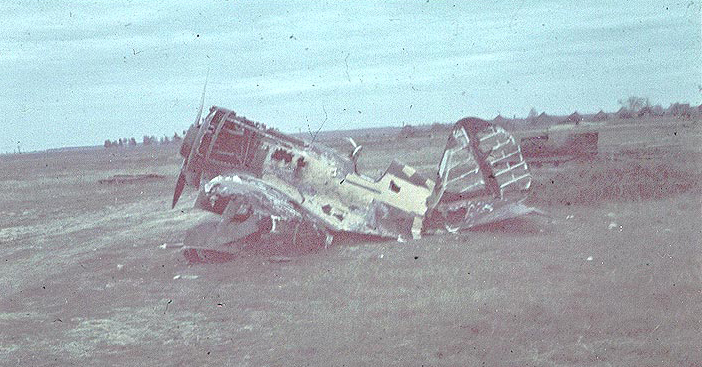
Another derelict I-16, in this case perhaps a Type 24, shot on AGFA
colour slide film. Despite the various colour oddities of this film
type, it is manifestly clear that this aircraft was comprehensively
primed with ALG-1 at the factory before finishing.
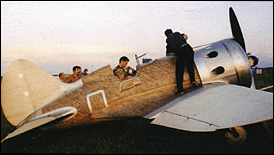
(Leftt) One of the modern I-16 Type 24 replica Warbirds built by Aviarestoration in Novosibirsk ca. 1992. The I-16’s unique construction method is demonstrated here before the aircraft was painted.
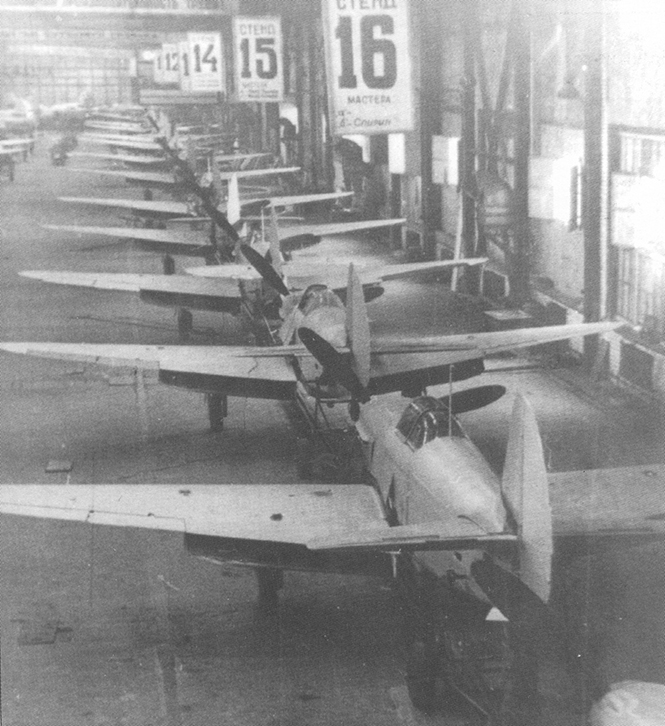
(Left) Yak-1b production at Factory 292, Saratov, ca. 1943. The
uniform over-all appearance of the aircraft in view, except for the
rudder fabric surfaces, strongly suggests that these examples have been
thoroughly primed with ALG-1. Note that the appearance of the aileron
fabric matches that of the rest of the airframe and not the rudder,
indicating that they have been primed as well.
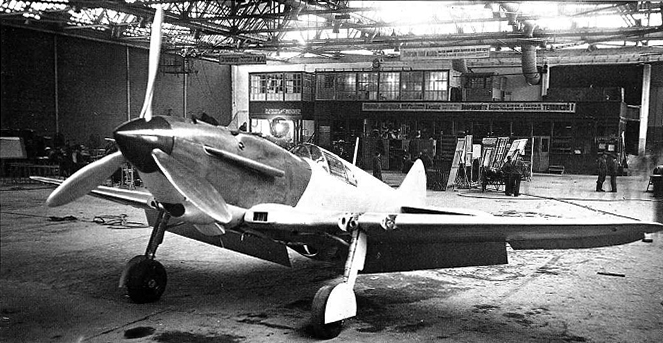
(Right) The I-301 prototype at Moscow, ca. 1940. The entire
fuselage and wing surfaces have been covered with resined fabric, even
to include the dural sheet covered intakes at the forward root area. No
such covering was applied to the engine panels, as these had to be
removable for servicing. The cowling panels seem to be wearing etching
primer of some kind, and the condition of the starboard wing is
uncertain.